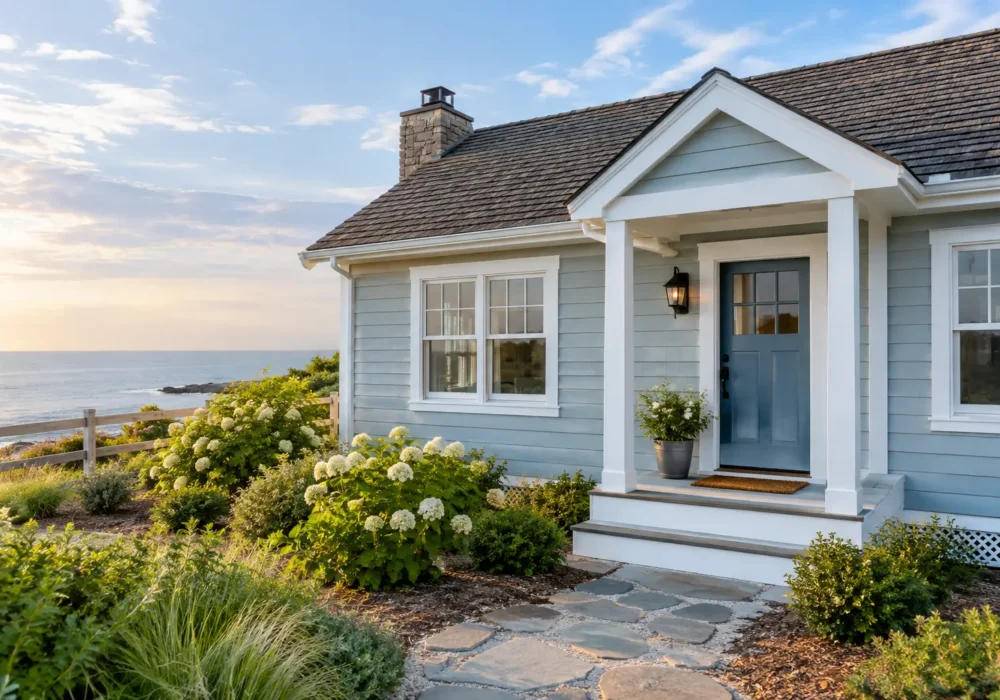
Salt air rarely announces the damage it is doing. It settles into weatherboards, works into small gaps around trims and slowly breaks down tired coatings until paint begins to peel, timber holds moisture and a cottage loses its crisp coastal character. This coastal cottage repaint example shows why a quality result depends on more than choosing an attractive new colour.
For homes across the Bellarine Peninsula, Surf Coast, Greater Geelong and bayside suburbs, exterior painting is both a visual upgrade and practical maintenance. The right process protects the building from the conditions it faces every day, while bringing back the neat, cared-for appearance that makes a coastal home feel welcoming.
The starting point: a cottage needing more than paint
Picture a weatherboard cottage a few streets back from the water. Its exterior is painted in a faded pale blue, with white windows and eaves. From the footpath it still has charm, but a closer look reveals cracked paint along the weatherboards, open joints near windows, rusty fasteners and softened timber on parts of the fascia.
This is a common point for owners to call a painter. The home may not look neglected, but its protective coating is no longer doing its job consistently. Simply painting over those problems can make the house look better for a short time, yet the failure underneath will soon return.
A proper assessment looks beyond the colour. It identifies where coatings are chalking, peeling or blistering, where water may be entering, and whether timber repairs are needed before painting begins. On a coastal property, this early attention can prevent a minor maintenance issue from becoming a much larger repair.
Preparation sets the life of the repaint
The most visible part of a repaint is the final coat. The work that determines how long it lasts happens before that coat goes on.
For this cottage, the exterior would first be thoroughly washed to remove salt residue, surface dirt, cobwebs, mould and loose paint. Pressure washing needs to be handled with care around older weatherboards and vulnerable timber. Too much force can drive water where it does not belong or damage already weakened surfaces. The aim is a clean, sound surface, not an aggressive wash.
Once dry, loose and flaking paint is scraped back and affected areas are sanded. This step feathers the edges between existing sound paint and bare spots so the fresh coating does not show harsh ridges. It also gives new paint a stable surface to grip.
Gaps around weatherboards, window frames and trim are then checked and sealed where appropriate. Flexible exterior gap filler helps reduce water entry while allowing for normal movement in timber. Failed or damaged sections of timber should be repaired or replaced before coating. Paint is a protective finish, not a fix for rotten wood.
In this example, minor carpentry repairs to a few fascia sections and window trims would be completed before priming. Dealing with those details at the right stage gives the finished work a cleaner appearance and protects the surrounding areas from ongoing moisture exposure.
Why bare timber needs primer
Any exposed timber, filled repair or sanded-back patch requires suitable primer before top coats are applied. Primer helps even out the surface, supports adhesion and provides a dependable base for the exterior paint system.
Skipping this stage may save time on the day, but it often creates uneven sheen, poor coverage and early coating failure. On a cottage exposed to coastal air, that is not a trade-off worth making.
Choosing colours for a coastal setting
The owners in this coastal cottage repaint example want a fresher look without turning the home into something unrecognisable. They settle on a soft warm white for the weatherboards, a muted blue-grey for the front door and clean white trim. The result feels calm and coastal, but still suits the age and character of the house.
Colour choice should work with the fixed elements that are staying, such as the roof, brickwork, paving, fencing and garden. A colour that looks beautiful on a small swatch can read much brighter outside in full sun. Testing sample colours on different elevations is worthwhile, particularly when the front of the house receives strong afternoon light while the side remains shaded.
Darker colours can look striking on trims, doors and feature sections, but they absorb more heat. That may be a consideration on older timber, north or west-facing elevations, and surfaces that already have movement. Lighter colours are often more forgiving and can help a modest cottage appear larger and better maintained. There is no single right palette – the best choice balances personal preference, the property’s style and the conditions of the site.
Applying a coating system built for exposure
With repairs complete, surfaces cleaned and primed, the repaint can move into its finishing stages. A professional exterior system normally includes primer where needed and two finish coats applied at the correct spread rate. Applying adequate paint film matters. Coats that are stretched too far may look acceptable initially but offer less protection and durability.
Timing also matters. Exterior painting should be planned around rain, humidity, wind and temperature. Coastal weather can change quickly, so a reliable painter monitors conditions rather than rushing paint onto a surface that is too damp, too hot or exposed to blowing debris.
Attention to edges makes a noticeable difference. Window frames, eaves, downpipes, doors and junctions between different materials need careful cutting-in and coverage. These are the places people see up close, and they are often the first places water can find its way behind a failed coating.
For the cottage, the front door is removed or carefully prepared in place depending on its condition and hardware. The door receives a separate level of care because it is a high-touch feature and a focal point from the street. Freshly painted gutters and downpipes complete the exterior, giving the home a consistent finish rather than a patchwork of old and new surfaces.
The difference after the repaint
When the job is complete, the change is not only about the new warm-white weatherboards. The cottage looks sharper because the details have been addressed: straight, sealed joints; smooth repaired trim; clean lines around windows; and an entry door with enough contrast to give the façade personality.
More importantly, the exterior has renewed protection against sun, rain, wind and salt-laden air. A repaint cannot remove the need for future maintenance, especially near the coast, but it gives the property a well-prepared starting point.
A good clean-up is part of that professional finish. Paint flakes, sanding dust, masking materials and rubbish should be removed, surrounding areas left tidy, and the owner able to walk around the home and see the work clearly. Respect for the property matters just as much as the finish on the walls.
What this example means for your own home
Every coastal cottage has its own challenges. A newer weatherboard home may only need washing, minor sanding and recoating. An older property could require substantial preparation, timber repairs and targeted attention to previous paint failures. Homes close to the beach may need more frequent inspections than those further inland.
The practical lesson is to act before widespread peeling or timber damage takes hold. Keep gutters clear, wash down salt and grime periodically, look for cracking around joins and inspect shaded elevations for mould. If paint begins to lift or timber feels soft, arranging an assessment early is usually simpler and more cost-effective than waiting.
For homeowners who want a repaint completed with careful preparation, clear communication and a tidy finish, Seaview Painting Services provides owner-led painting across Wyndham, Hobsons Bay, Greater Geelong, the Bellarine Peninsula and Surf Coast. A no-obligation quote can help clarify the condition of your exterior, the repairs required and the right scope for a lasting result.
A coastal cottage should not need to look brand new to look well cared for. With sound preparation and the right paint system, its character can stay intact while the exterior is ready for the seasons ahead.