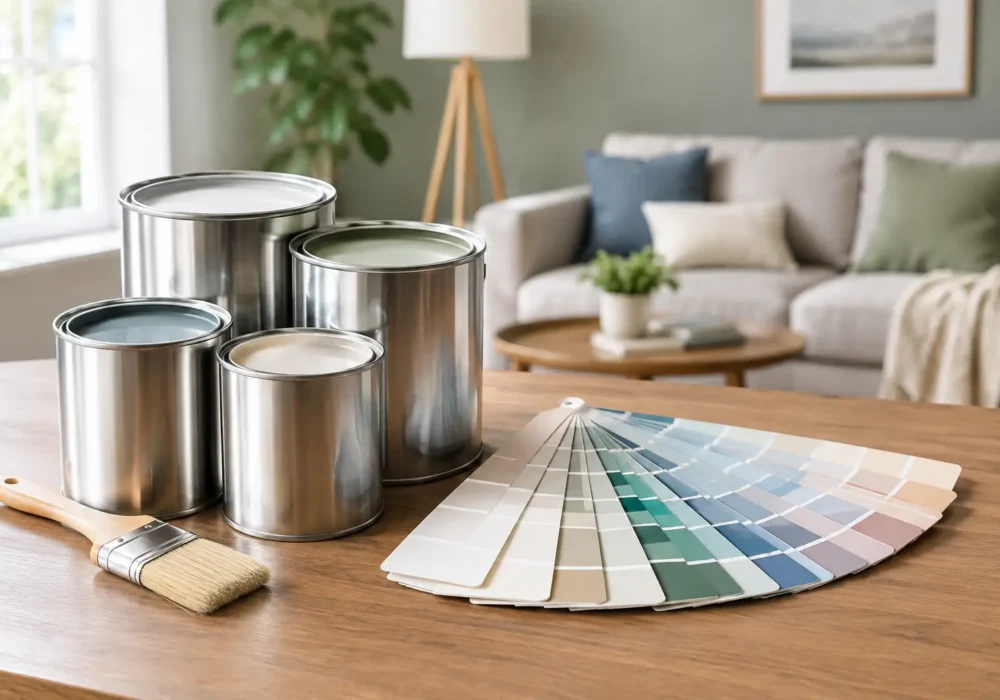
A freshly painted room can still feel wrong if the finish is wrong. A wall colour may look softer or sharper than expected, marks may show up after the first busy week, or light from a large window may reveal every small imperfection. This guide to paint sheen selection explains how to choose a finish that suits the room, the surface and how your property is used.
Paint sheen refers to how much light a painted surface reflects. Lower-sheen finishes absorb more light for a softer look, while higher-sheen finishes reflect it and create a more noticeable shine. Higher sheen is generally more washable, but it also draws attention to dents, patching and uneven surfaces. The right choice is rarely about choosing the shiniest or toughest paint alone. It is about getting the balance right.
A practical guide to paint sheen selection
Most interior and exterior projects use a combination of finishes. Walls, ceilings, skirting boards, doors and wet areas do different jobs, so treating every surface the same can make a space harder to maintain or less polished than it should be.
Paint names vary slightly between manufacturers, but the sheen scale usually moves from flat or matt through to low sheen, satin, semi-gloss and gloss. The product quality, colour and condition of the surface matter too, which is why a small test area can be worthwhile before committing to a full repaint.
Flat and matt paint
Flat or matt paint has very little reflective shine. It gives ceilings and walls a calm, modern appearance and is excellent at disguising minor surface variations. On older plaster, repaired walls or broad ceilings with plenty of natural light, a flat finish can look particularly smooth.
For most homes, flat paint is the first choice for ceilings. Ceilings are less likely to be touched, scuffed or splashed, so the lower washability is not usually a concern. It also prevents overhead light from highlighting joins, patches or roller marks.
On walls, matt can work well in low-traffic bedrooms, formal living areas and spaces where appearance is the main priority. However, not all matt paints perform the same way. A quality washable matt may suit a family home, while a basic flat paint can be difficult to clean without leaving a visible patch. If children, pets, tenants or frequent visitors are part of the picture, low sheen is often the safer wall choice.
Low-sheen paint
Low sheen is a popular all-rounder for interior walls. It has a subtle finish that feels refined rather than shiny, while offering better durability and cleanability than flat paint. In hallways, living rooms, bedrooms, dining areas and entryways, low sheen provides a practical finish without putting every small wall imperfection on display.
This makes it a strong option for full house repaints and rental properties, where walls need to handle everyday contact. Marks around light switches, handprints near doorways and the occasional scuff can generally be cleaned more easily than on a flat finish.
Low sheen still benefits from careful preparation. Filling, sanding, gap sealing and spot priming create a more even result, especially where old picture hooks, cracks or previous repairs are present. A quality paint finish begins well before the final coat goes on.
Satin and semi-gloss paint
Satin and semi-gloss finishes have more sheen and a more durable surface. They are commonly used on doors, door frames, skirting boards, architraves, window trims and other timberwork. Their smooth, wipeable finish stands up well to fingerprints, knocks and regular cleaning.
Semi-gloss is often a sensible choice for internal trims because it creates a clear contrast with low-sheen walls and is easy to maintain. In busy homes, schools, offices and commercial spaces, this extra durability can be valuable. It is also useful in bathrooms, laundries and kitchens, provided the selected paint is suitable for those conditions.
There is a trade-off. More shine means more visibility. Rough timber, old brush marks, poorly filled nail holes and uneven repairs will be easier to spot under semi-gloss. Thorough sanding and priming are essential, particularly when repainting older doors and trim or changing from a darker colour to white.
Satin sits between low sheen and semi-gloss. It can suit walls in higher-use rooms or cabinetry and trims where a softer finish is preferred. It is worth checking a sample first, as satin products can look quite different depending on the brand, colour and amount of natural light in the room.
Gloss paint
Gloss is the most reflective finish and is exceptionally hard-wearing when applied to a properly prepared surface. It is traditionally used on front doors, feature timberwork, metal railings and selected exterior trims. A gloss front door can give an entry real presence, particularly against a lower-sheen weatherboard or rendered façade.
It is not usually the best choice for large internal wall areas. The reflection can feel harsh and will reveal surface defects from several angles. Gloss also needs more careful application to avoid visible brush marks, runs and uneven coverage. When used in the right place, though, it delivers a crisp, durable finish that is easy to wipe down.
Choosing sheen room by room
The room’s use should lead the decision. A quiet guest bedroom has different needs from a kitchen used three times a day, and a rental hallway needs a more forgiving finish than a rarely used formal lounge.
For ceilings, flat or ceiling-specific matt paint is generally the best fit. For standard internal walls, low sheen offers a dependable balance of appearance and durability. Bedrooms can also suit washable matt if the walls are in good condition and traffic is light.
Kitchens, bathrooms and laundries need finishes that can cope with moisture, steam and cleaning. A quality low sheen or satin finish may work on walls, while semi-gloss is often well suited to trims and doors. Good ventilation remains important. Paint alone cannot fix ongoing condensation, leaks or inadequate exhaust fans.
For doors, skirting and architraves, satin or semi-gloss are reliable choices. Semi-gloss provides a more traditional, defined trim look; satin is slightly softer and can suit contemporary interiors. For commercial corridors, education facilities and high-contact areas, a durable washable system is often more valuable than a very flat appearance.
Exterior paint sheen needs a different approach
Exterior paint works harder than interior paint. It must deal with UV exposure, rain, wind, temperature changes and airborne grime. The right sheen supports both appearance and long-term maintenance, but surface preparation remains the deciding factor in how well a coating holds up.
Low sheen is widely used on exterior walls, including weatherboards, fibre cement and rendered surfaces. It offers an even appearance that does not overemphasise minor surface movement or texture. It is generally a good choice for broad wall areas where the goal is a clean, well-kept finish without excessive shine.
Semi-gloss and gloss are commonly used for exterior doors, window frames, fascia boards and trims. These surfaces receive more handling or benefit from a sharper contrast. On timber, however, peeling paint, failed putty, exposed end grain and rotten sections need attention before repainting. Simply coating over an existing issue may look better briefly, but it will not provide a lasting result.
Darker colours and high-sheen paints can both show more heat and movement, particularly on sun-exposed timber. For heritage homes, weatherboards and older joinery around Geelong, the Bellarine Peninsula and coastal suburbs, product selection should take the existing surface condition and exposure into account.
Light, colour and preparation can change the result
Paint sheen is not viewed in a showroom. It is viewed in your home or workplace, often at different times of day. A soft grey low-sheen wall may look calm in morning light but show a gentle reflection at night under downlights. White semi-gloss trim can appear fresh and clean, yet it can also highlight an uneven wall line beside it.
Colour affects perceived sheen too. Deep colours can look richer with a little sheen but may show scuffs, lap marks or touch-ups more readily. Very light colours may benefit from the subtle depth of low sheen, while flat paint can create a softer, more forgiving result on an imperfect wall.
This is where professional preparation earns its value. Washing, sanding, filling, sealing gaps, repairing minor damaged timber and applying the right primer give the topcoat a stable, even foundation. The paint sheen then looks intentional, rather than drawing attention to what sits underneath.
If you are planning an interior refresh, exterior repaint or a complete property makeover, choose your sheen after considering how each surface will be used and how much condition work it needs. A small sample painted in the actual room can answer questions that a colour card cannot. For practical advice and a carefully prepared finish, Seaview Painting Services can help property owners choose a paint system that looks right on day one and continues to work hard long after the brushes are packed away.