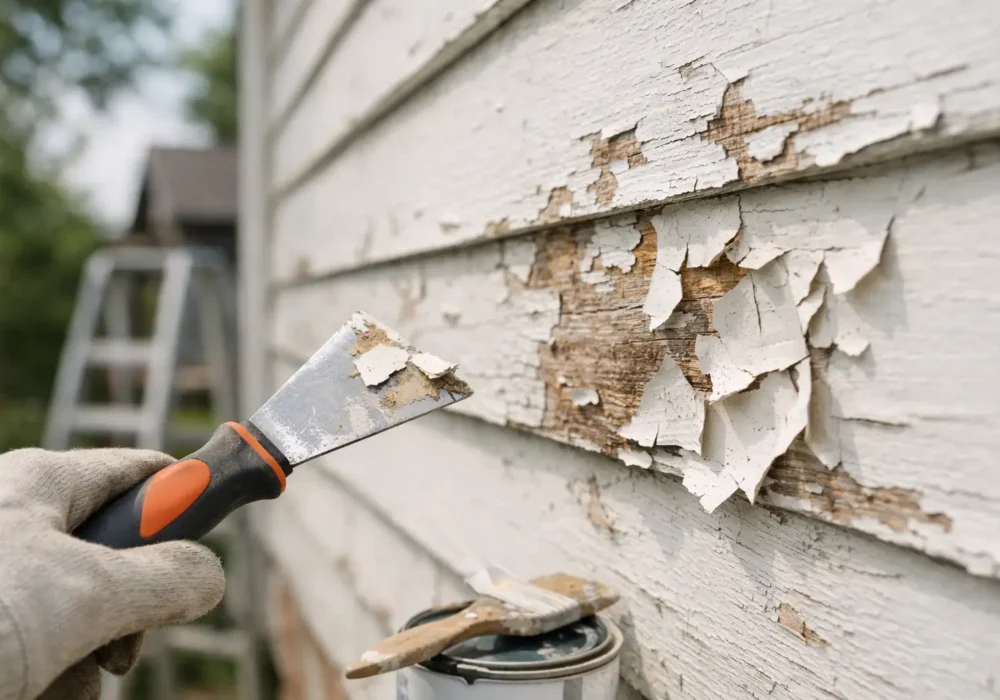
A few loose flakes around a window frame can quickly become bare timber, stained render or widespread paint failure. Understanding what causes exterior paint to peel helps you address the source of the issue, rather than simply covering it with another coat that may fail again next season.
Exterior paint does a hard job. It protects timber, brickwork, render, metal and trim from sun, rain, wind and changing temperatures while keeping your property looking cared for. When it loses its grip, the problem is usually linked to moisture, surface preparation, the condition of the existing coating or unsuitable painting conditions. Often, more than one factor is at work.
What causes exterior paint to peel?
1. Moisture behind or beneath the paint
Moisture is one of the most common reasons exterior paint peels. Water can enter through failed caulking, cracked joints, blocked gutters, leaking downpipes, damaged flashing or gaps around windows and doors. On weatherboard homes, it may also find its way into unsealed board edges and exposed end grain.
Once moisture gets behind a coating, it can push the paint away from the surface. You may notice bubbling, blistering, soft timber, dark staining or sheets of paint lifting from a localised area. Repainting over damp material will not solve the problem. The leak or water path needs to be located, repaired and allowed to dry before preparation begins.
2. Poor surface preparation
Paint needs a clean, sound and properly prepared surface to bond well. Dirt, chalky old paint, mould, salt residue, oil, cobwebs and loose flakes all interfere with adhesion. This is particularly common on exterior areas that have not been washed before painting, or where a quick touch-up has been applied over deteriorating coatings.
Preparation is not the glamorous part of a repaint, but it determines how long the finish lasts. Thorough washing, removal of loose material, sanding rough edges, filling holes, sealing gaps and spot priming exposed areas give new paint the stable base it needs.
3. Painting over chalky or weathered coatings
Older painted surfaces can break down under years of UV exposure. When you run a hand across the wall and pick up a powdery residue, the coating is chalking. New paint applied over that residue is effectively sticking to loose powder, not the wall itself.
This can lead to peeling across broad sections of cladding, fascia boards or rendered walls. Proper cleaning is essential, and heavily weathered surfaces may need more sanding, sealing or priming before top coats are applied. The right approach depends on the material and the condition of the existing paint.
4. Incompatible paint systems
Not all coatings work well together. Applying a water-based paint over an unsuitable glossy or solvent-based surface without the right preparation can result in poor adhesion. The same applies when unknown old coatings, unsuitable primers or products designed for different materials are used together.
A professional painter will assess the existing surface rather than assume every wall can be treated the same way. Glossy paint may need sanding to create a key, bare timber needs an appropriate primer, and metal or masonry often requires a specific coating system. Choosing products based on the substrate and existing finish avoids costly failures later.
5. Heat, harsh sun and UV exposure
Properties across Wyndham, Hobsons Bay, Geelong, the Bellarine and the Surf Coast are exposed to strong sun, salt air in some locations and rapidly changing weather. Dark-coloured surfaces, western elevations and areas with little shade can become particularly hot. Over time, UV light breaks down the binders in paint, leaving the coating brittle and less able to protect the surface beneath.
Sun damage does not always cause dramatic peeling straight away. It may begin with fading, chalking or fine cracking, then progress as moisture enters through the weakened paint film. Quality exterior coatings and sensible colour choices can make a meaningful difference on exposed parts of the building.
6. Painting in the wrong conditions
Exterior painting is highly dependent on weather. Paint applied to a hot surface may dry too quickly and fail to bond properly. Paint applied when rain is approaching, humidity is high or the surface is damp may not cure as intended. Cold conditions can also slow drying and affect how the coating forms.
The forecast matters, but so does the temperature of the actual surface. A wall in full afternoon sun can be far hotter than the air temperature suggests. Good painters plan the job around the property, working on suitable elevations at suitable times and allowing each coat the recommended drying time.
7. Too many coats or coats applied too heavily
A thick paint build-up may hide the original texture and look solid at first, but it can become prone to cracking and peeling as it ages. This often happens when repeated repainting has been carried out without removing loose layers or properly feathering damaged edges.
Equally, applying a coat too heavily can create curing problems. Exterior paint is designed to be applied at a particular spread rate so it dries and performs as intended. Where existing paint is unstable, the answer is not simply more paint. Failing sections need to be removed back to a sound edge and prepared correctly.
8. Timber movement, decay and failed sealant
Timber expands and contracts with heat and moisture. That movement is normal, but exposed joins, cracks and unsealed edges allow water in and place pressure on the paint film. Timber that is beginning to rot or split will not hold paint reliably, no matter how good the top coat is.
Peeling around windows, fascia boards, verandah posts, doors and weatherboards can point to a maintenance issue rather than a painting issue alone. Minor carpentry repairs, replacement of damaged timber and fresh gap sealing are often needed before repainting. Treating these details early can prevent a smaller repair becoming a larger one.
Finding the real cause before repainting
The pattern of peeling tells a story. Paint lifting in a small patch below a gutter may indicate a leak. Blistering around a bathroom or laundry exterior wall may suggest moisture from inside or inadequate ventilation. Widespread failure on a sunny elevation may be linked to weathered paint and UV exposure, while peeling around trim can be caused by failed caulking.
It is also worth checking whether the coating is peeling down to bare material or separating between paint layers. Bare timber, metal or masonry points to poor adhesion at the surface. If the old paint remains attached but the new layer comes away, incompatibility, inadequate sanding or contamination may be the likely cause.
For older or heritage properties, avoid aggressive scraping without first considering the age and type of existing coatings. Older paint may require careful handling. A measured inspection and appropriate preparation method protect both the property and the people working around it.
How a lasting repaint is prepared
A durable exterior repaint starts with correcting defects, not choosing a top-coat colour. First, address water entry, rotten timber, loose sealant and damaged trim. Then wash the surface to remove built-up dirt, mould, salt and chalking residue. Pressure washing can be useful when carried out carefully, but it is not suitable for every surface and must be followed by adequate drying time.
Loose and flaking paint is scraped away, and the remaining edges are sanded so they blend into the sound coating. Cracks and holes are filled, gaps are sealed where appropriate, and bare surfaces are primed with a product suited to the material. Only then is the finish paint applied in suitable weather and at the correct coverage rate.
This process takes more time than a quick patch-up, but it is the difference between paint that looks fresh for a short period and a finish that continues to protect the building. On weatherboards and timber trim, careful attention to board edges, joints and end grain is especially valuable.
When a patch repair is enough – and when it is not
A localised repair can be a sensible option when peeling is confined to a small, clearly identified area, such as a repaired section of timber or a spot affected by a past leak. The surrounding paint must still be sound, and the underlying cause needs to be resolved first.
If paint is peeling in multiple locations, feels chalky across large areas, or is failing on several elevations, a broader repaint is usually more cost-effective than repeated touch-ups. Isolated repairs may stand out in colour and sheen, even with careful colour matching, because older paint fades and weathers over time.
If exterior paint is peeling at your home or commercial property, acting before timber and trim are exposed can save considerable repair work. Seaview Painting Services can assess the condition of the surface, complete the necessary preparation and minor repairs, and provide a clear, no-obligation quote for a finish built to handle local conditions.