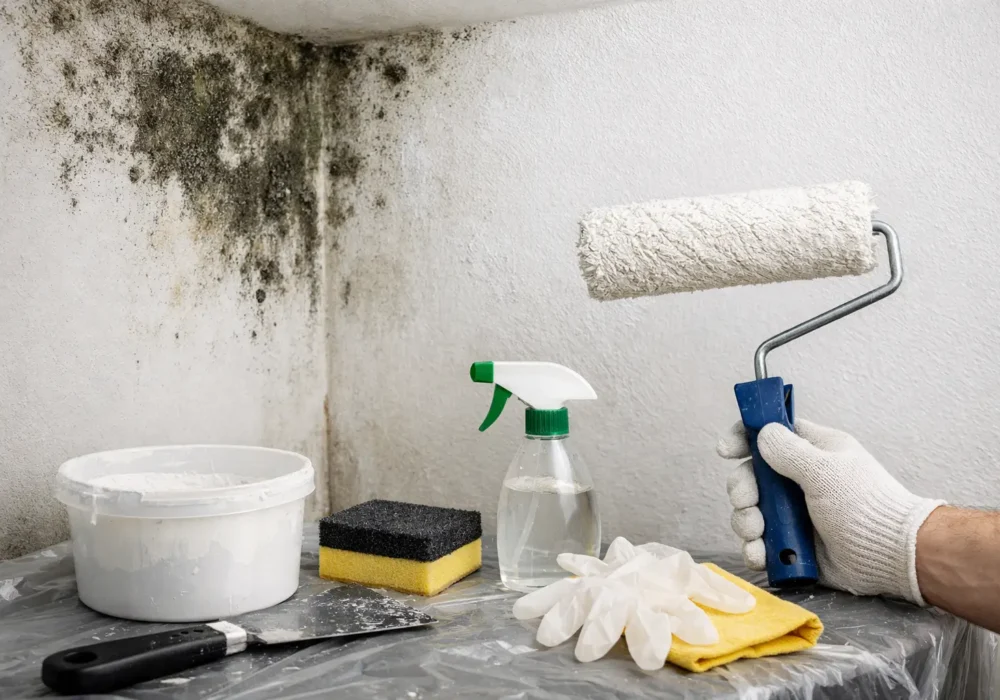
A dark patch above the shower, spotting around a bedroom window or mould marks on an exterior eave can make a room feel tired fast. But can you paint over mould and expect it to stay gone? In most cases, no. A fresh coat may hide the stain temporarily, but it will not remove active mould or fix the dampness that allowed it to grow.
Painting is the finishing step, not the cure. For a clean, durable result, the mould needs to be dealt with safely, the moisture source needs attention, and the surface needs proper preparation before primer or paint goes on.
Can you paint over mould without cleaning it?
Painting directly over mould is rarely a good idea. Mould spores and residue can interfere with paint adhesion, particularly on porous surfaces such as plaster, timber and unsealed masonry. Even if the new paint initially looks neat, the underlying issue can return as discolouration, bubbling, peeling or fresh mould growth.
Mould-resistant paint can be useful in the right setting, but it is not a treatment product. It helps reduce the likelihood of future surface growth when the room is properly ventilated and dry. It cannot overcome a leaking roof, a poorly sealed window, a rising damp problem or ongoing condensation.
There is also a practical health consideration. Disturbing a large mould-affected area can release spores into the air. If the growth is widespread, keeps returning or appears after water damage, it is sensible to have the cause assessed before any decorating work begins.
Find out why the mould is there first
The cause matters more than the colour of the stain. In homes across coastal and bayside areas, moisture can come from several directions: humid bathrooms and laundries, limited airflow in bedrooms, wind-driven rain, ageing exterior seals, roof leaks or plumbing leaks hidden inside a wall.
A few clues can help narrow it down. Mould concentrated on a cold external wall or near aluminium window frames is often linked to condensation. Marks that worsen after rain may point to a roof, gutter, flashing or window issue. A localised patch below a bathroom, kitchen or laundry can indicate a plumbing leak. On exterior timber, mould and mildew often build up where shade, vegetation and poor drainage keep the surface damp.
The timing is worth considering too. If mould returns within weeks of cleaning, there is usually an ongoing moisture problem. Repainting before it is corrected often means paying twice for the same job.
Common moisture issues to address
In a bathroom, check whether the exhaust fan actually vents outside and whether it runs long enough after showers. In bedrooms, improving airflow, managing indoor humidity and allowing space between furniture and cold walls can make a noticeable difference.
Outside, keep gutters clear, make sure downpipes direct water away from the building, and look for failed sealant around windows, doors and cladding. Weatherboards, fascia boards and eaves need particular attention when paint has cracked or timber joints have opened up. Minor repairs, filling and gap sealing can be part of good painting preparation, but significant leaks or building defects should be resolved first.
How to prepare a mould-affected surface for painting
Preparation varies according to the surface, the size of the affected area and the source of moisture. The goal is always the same: remove contamination, dry the substrate thoroughly, repair damage and create a sound base for the new coating system.
1. Deal with the moisture source
This comes before cleaning and painting. Repair leaks, improve ventilation or address drainage as needed. If a wall or ceiling has been wet, allow enough drying time before proceeding. Painting over damp plasterboard, timber or masonry can trap moisture and lead to paint failure.
2. Clean the mould carefully
For small, accessible areas, suitable protective gear and careful cleaning are essential. Wear gloves, eye protection and a properly fitted mask, and keep the space ventilated. Use a mould-cleaning product appropriate for the surface, following the manufacturer’s directions closely. Never mix cleaning chemicals.
Avoid dry brushing or sanding active mould. This can spread spores and push them into surrounding areas. Soft furnishings, carpet, insulation and badly affected plasterboard may need specialist advice, especially after a significant leak or flooding event.
3. Rinse where required and let the surface dry fully
Some mould treatments require rinsing while others do not, so follow the product instructions rather than guessing. The surface must then dry completely. This is not a step to rush, particularly in winter, in shaded rooms or after a water event.
4. Remove loose paint and repair the substrate
Once clean and dry, loose or blistered paint should be scraped back, edges feather-sanded and damaged areas repaired. Cracks, nail holes and gaps around trims should be filled or sealed with suitable products. On exterior timber, any soft or decayed sections need repair or replacement before coating.
A professional painter will also check whether the existing paint has failed because of moisture, poor adhesion or an incompatible previous coating. Simply sanding and painting over a failed surface may produce the same problem again.
5. Prime stains and bare areas
Mould can leave stubborn staining even after it has been removed. A quality stain-blocking primer can help prevent marks bleeding through the topcoat, particularly on ceilings and light-coloured walls. Bare plaster repairs, raw timber and exposed metal also need the correct primer for reliable adhesion.
6. Apply the right paint system
For bathrooms, laundries and other moisture-prone interiors, choose a washable quality paint designed for those conditions. Kitchens may benefit from a durable low-sheen finish that stands up to regular cleaning. For exterior surfaces, use coatings suited to the substrate and local weather exposure.
The best finish is not always the glossiest or most expensive one. It depends on the room, the surface condition, the existing coating and the level of moisture exposure. Good product selection only works when the cleaning, repairs and priming underneath have been done properly.
When mould means you should call in help
Small spots from everyday condensation can often be managed with sensible cleaning and better ventilation. Larger, recurring or water-damaged areas are different. Seek professional assistance if mould covers a substantial section of wall or ceiling, there is a musty smell without an obvious source, plasterboard is soft or swollen, timber is deteriorating, or the mould returns after cleaning.
It is also worth getting advice before painting heritage surfaces, occupied commercial spaces, schools or rental properties. These projects often need staged work, access planning and careful protection of occupants and furnishings. The objective is to solve the paint problem without creating unnecessary disruption.
For landlords and property managers, documenting the moisture issue and repair work can also help distinguish between a one-off surface clean and a maintenance problem that needs further attention.
Does mould-resistant paint stop mould coming back?
Mould-resistant paint can be a worthwhile final layer in bathrooms, laundries and rooms with occasional condensation. It is designed to resist surface mould growth better than standard paint, provided the surface is clean, dry and properly prepared.
It will not stop mould caused by persistent dampness. Think of it as added protection, not a substitute for extraction fans, leak repairs, cleaning or adequate ventilation. If the room remains wet for long periods, any paint system will be under pressure.
A finish that lasts starts before the paint tin opens
A mould mark is often your property’s way of showing that water, airflow or surface protection needs attention. Taking the time to identify the cause, clean thoroughly and prepare the area correctly protects more than the appearance of the room – it helps the new finish perform as it should.
For homeowners and property managers who want the issue assessed as part of a repaint, Seaview Painting Services can help with careful surface preparation, minor timber and trim repairs, priming and a quality finish. A properly prepared surface gives your paintwork the best chance of looking clean and staying that way.