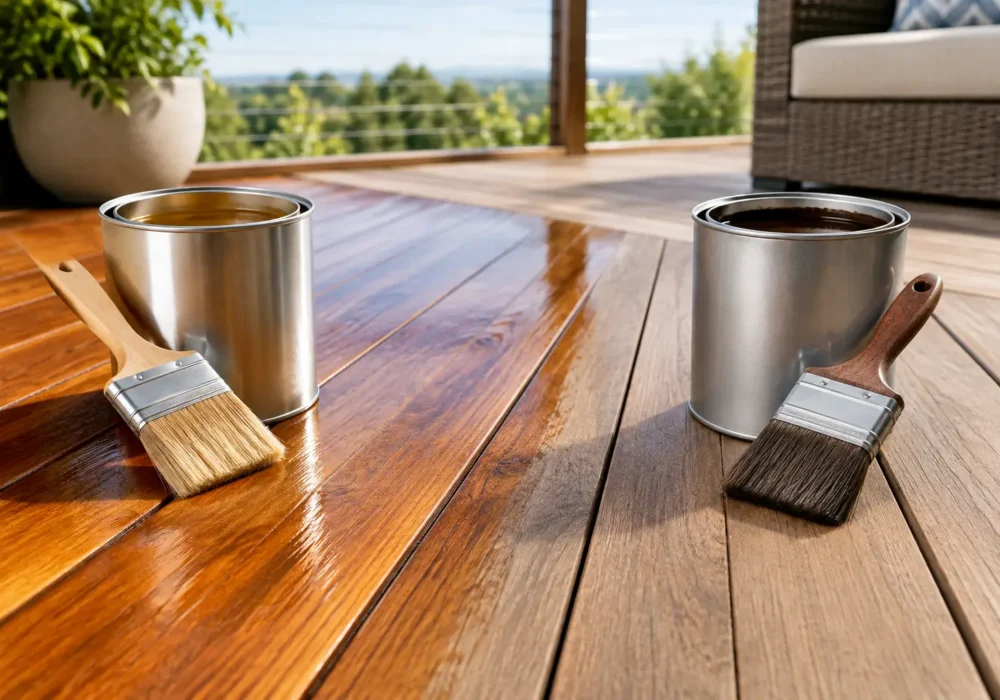
A deck can look tired long before the timber has reached the end of its life. Grey boards, patchy colour, splintering edges and water soaking straight into the surface are all signs it needs attention. When comparing deck oil versus stain, the better choice is not simply the product with the darkest colour or longest promise on the tin. It depends on the timber, the deck’s condition, how much weather it receives and how much maintenance you are prepared to do.
For homes across Wyndham, Hobsons Bay, Geelong, the Bellarine and the Surf Coast, decks work hard. They face strong summer UV, rain, salt air in coastal locations, foot traffic, outdoor furniture and the occasional barbecue spill. Choosing the right finish starts with understanding what oil and stain actually do.
Deck oil versus stain: the key difference
Deck oil is designed to penetrate into the timber fibres. It nourishes the surface, helps repel moisture and usually leaves a natural, low-sheen appearance that allows the grain to remain visible. Clear oils offer minimal colour change, while tinted oils can restore warmth and provide extra UV protection.
Deck stain adds colour as well as protection. Depending on the product, it may penetrate the timber, form a light protective layer on the surface, or do a little of both. Semi-transparent stains still show the grain, while more heavily pigmented products can create a more even, coloured finish over weathered boards.
The distinction is not always as simple as “oil penetrates and stain sits on top”. Modern deck coatings vary considerably between manufacturers. Some stains are oil-based, some are water-based, and some are specifically formulated as penetrating timber finishes. Always assess the individual product and follow its preparation and recoating requirements.
When deck oil is the better choice
Deck oil is often the right fit when you like the natural character of timber and want an easier finish to refresh over time. It suits many hardwood decks, including merbau and spotted gum, especially where the boards are in reasonable condition and the aim is to enhance rather than disguise the timber.
A quality decking oil penetrates rather than creating a thick coating that can peel away. When it is time to maintain the deck, the usual process is to clean it thoroughly, allow it to dry and apply another coat where needed. This can be more straightforward than stripping a failing surface coating.
Oil is also a practical choice for decks with lots of movement. Timber expands and contracts with changing temperatures and moisture levels. A penetrating oil tends to move with the timber better than a heavier film finish, which may crack if the substrate shifts.
There is a trade-off. Oiled decks generally need more regular attention, particularly in full sun or exposed coastal conditions. High-traffic zones near doorways and outdoor settings can wear first. Depending on the product, exposure and deck use, an oil finish may need checking every six to 12 months and recoating as required.
Clear oil is rarely the best answer for a deck exposed to harsh sun. Pigment is what helps block UV, so a lightly tinted oil usually provides better protection than a completely clear product. The timber may still naturally fade between maintenance coats, but it will do so more slowly.
When deck stain makes more sense
Stain is a strong option when colour consistency matters. If a deck has faded unevenly, has boards from different batches, or has minor visual imperfections, a semi-transparent or more opaque stain can provide a more uniform appearance than oil.
A stain can also be useful when you want to change the tone of the deck without covering it with paint. Rich brown, grey and natural timber shades can help a deck sit comfortably with the home’s exterior colours, fencing and landscaping. On an older deck, a stain with stronger pigment may improve the overall presentation while still retaining some timber texture.
The main consideration is future maintenance. If the stain creates a surface film, it must be applied to a properly cleaned, dry and sound deck. Poor preparation can lead to patchiness, peeling or flaking, particularly where old oil, dirt, mould or previous coatings remain in the timber. Once a film-forming coating begins to fail, repairs can involve more sanding and preparation before recoating.
Water-based deck stains can dry faster and have lower odour, which is helpful on occupied properties. Oil-based products often provide longer working time and can be more forgiving during application. Neither is automatically better. The right choice comes down to the existing finish, timber type, weather conditions and the product system being used.
Start with the condition of the timber
Before choosing a finish, look closely at the deck itself. New timber needs time to weather and dry before many finishes can be applied effectively. Fresh hardwood can contain natural oils and tannins, while treated pine can have high moisture content. Applying a coating too soon can affect adhesion and penetration.
Older decks need an honest assessment. Surface greying is usually cosmetic, but deep splits, soft boards, raised fasteners, rot, loose handrails and failing joists need attention first. No oil or stain can repair damaged timber. Minor carpentry repairs and replacement boards should be completed before preparation begins, then the new timber should be treated appropriately so it does not stand out from the rest of the deck.
Existing coatings matter too. An oil finish may accept a maintenance coat after cleaning, but applying a new product over an unknown old coating is risky. Water may bead on some areas and absorb into others, creating an uneven result. A small test area can reveal whether the timber is ready to accept the proposed finish.
Preparation determines the result
The finish coat gets the attention, but preparation is where a deck’s durability is won or lost. Dirt, sunscreen residue, leaf tannins, algae and old coating residue can all interfere with the way oil or stain bonds to timber.
A professional preparation process usually includes a thorough clean, treatment for mould or mildew where necessary, and sufficient drying time. Weathered or rough timber may need sanding to remove loose fibres and create an even surface. Dust must then be removed carefully, and gaps, fasteners, edges and surrounding surfaces checked before coating begins.
Pressure washing can be useful, but it needs to be done with care. Excessive pressure can fur the timber, damage softer boards and drive water deep into the deck. The deck must be allowed to dry fully before any oil or stain is applied. Coating damp timber is one of the quickest ways to end up with blotches, poor penetration or early coating failure.
Choose for maintenance, not just day-one colour
It is easy to choose a finish based on how it looks in a small sample, but the better question is how it will look after a summer outdoors. A dark stain may create a dramatic finish, yet it can show scratches, dust and fading more readily. A very light or clear oil may look natural initially but offer less UV protection.
Consider how the deck is used. A covered entertaining area may suit a more refined finish because it receives less direct weather. An open deck around a pool, garden or beachside home needs a practical coating plan that can be renewed without unnecessary disruption. If you rent out the property or manage several sites, a finish with predictable maintenance requirements can be the sensible choice.
For many homeowners, a tinted penetrating oil offers the best balance of natural appearance and manageable upkeep. For a weathered deck that needs a more even colour, stain can deliver a stronger visual improvement. Neither option is permanent, and that is normal. Exterior timber is a living material exposed to the elements.
Apply in the right conditions
Even the right product can fail if it is applied on the wrong day. Avoid coating timber in rain, on very hot boards, in strong direct sun or when dew is likely before the finish has cured. Heat can cause the coating to dry too quickly, leaving lap marks and uneven absorption. Moisture can interfere with adhesion and leave the finish cloudy or patchy.
Apply thin, even coats in the direction of the boards, maintaining a wet edge and removing excess product where required. Heavy coats do not usually equal better protection. With many oils, excess material left on the surface can become sticky, attract dirt and dry unevenly.
A deck should also be kept clear while it cures. Follow the product’s guidance for foot traffic, furniture replacement and full curing times. Dragging chairs or placing heavy pots back too early can mark a finish before it has properly hardened.
A considered finish protects your investment
The right choice between oil and stain should make your deck easier to live with, not create another high-maintenance job. Look at the timber’s condition, the level of exposure and the finish you are willing to maintain, then choose a product system suited to all three.
For decks that need careful restoration, repairs or a professional finish, Seaview Painting Services can assess the timber, complete the required preparation and help select a practical coating approach. A well-prepared deck with a realistic maintenance plan will keep looking welcoming long after the first coat has dried.