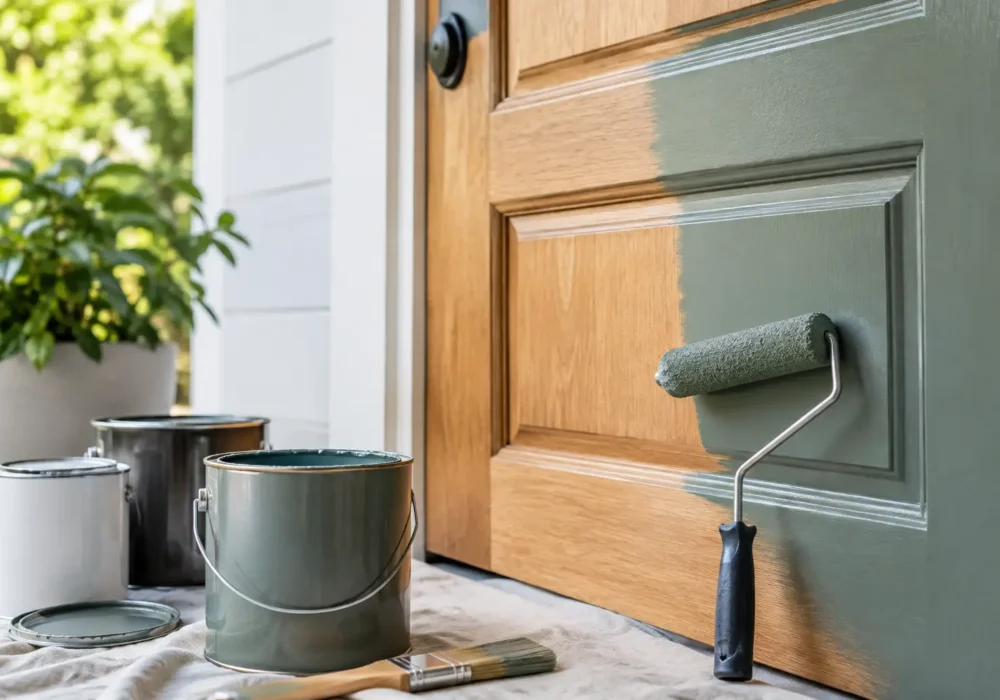
A timber door takes more punishment than most painted surfaces. It is handled constantly, knocked by bags and furniture, exposed to wet shoes, and often catches direct sun or driving rain. Choosing the best paints for timber doors is therefore less about picking a colour from a chart and more about matching the coating system to the door, its location and its condition.
A quality finish starts with the timber underneath. Even the most suitable paint will struggle over loose old coatings, bare weathered timber, open joints or moisture damage. With the right preparation and paint choice, however, a timber door can look sharp and stay protected for years.
What makes a paint suitable for a timber door?
Door paint needs to do two jobs at once. It needs to look smooth and refined, particularly on a front entry or internal feature door, while also standing up to regular contact and movement. Timber expands and contracts with changes in temperature and humidity, so a coating also needs enough flexibility to move without cracking or peeling.
For internal doors, scuff resistance, washability and a low-odour application are usually the priorities. For exterior doors, weather protection matters most. Sunlight, moisture and temperature changes can quickly break down a poor-quality coating, especially on doors facing north or west, or on exposed coastal properties around Geelong, the Bellarine and Surf Coast.
The best option is rarely just one tin of paint. A reliable result generally involves suitable preparation, a compatible primer where needed, and two full top coats.
Best paints for timber doors by location
Interior timber doors
For most internal timber doors, a premium water-based enamel is an excellent choice. Modern water-based enamels dry faster than traditional oil-based products, have lower odour and are less likely to yellow over time. They also provide a hard, washable surface that is well suited to bedrooms, hallways, bathrooms and living areas.
Choose a product specifically labelled as an enamel or trim paint rather than standard wall paint. Wall paint is designed for broad surfaces and can mark more easily when used on doors, frames and skirting boards.
A satin or low-sheen finish is a practical choice for many homes. It gives the door a soft, contemporary appearance while being easier to clean than flatter finishes. Semi-gloss provides greater durability and is often a good fit for busy family homes, rentals and high-traffic commercial areas. Gloss can look striking on detailed heritage joinery, but it highlights every brush mark, dent and uneven patch, so the preparation needs to be first-rate.
Exterior timber doors
Exterior doors need a paint system made for exterior timber and trim. Look for a premium exterior enamel or exterior acrylic trim paint that offers UV resistance, flexibility and protection from moisture. These coatings are formulated to cope with harsher conditions than interior paints.
Water-based exterior enamels are a strong all-round option for many entry doors. They hold colour well, dry efficiently and allow the timber to breathe more readily than some older coating systems. They can be especially practical when the door needs to be returned to service quickly.
Oil-based or alkyd enamels can still be suitable in particular situations. They tend to level beautifully and can create a traditional, rich finish on older doors and detailed joinery. The trade-off is longer drying times, stronger odour and a greater chance of white and pale colours yellowing over time, particularly in shaded areas. They also require careful product compatibility when repainting in the future.
For a front door receiving strong afternoon sun, colour choice matters as much as paint type. Very dark colours absorb more heat, which can increase timber movement and place extra pressure on the paint film. A dark charcoal or black door can look excellent, but it needs sound timber, careful preparation and an exterior product approved for deep colours.
Previously painted doors
A door in good condition may only need cleaning, sanding to create a sound key, spot priming and two coats of a compatible top coat. But if the existing paint is flaking, crazed, sticky or peeling back to bare timber, simply painting over it is likely to repeat the problem.
The cause should be addressed first. Peeling near the bottom edge may point to water entering through an unsealed end grain. Blistering can indicate trapped moisture or heat. Repeated marks around the handle may show that the old coating is too soft for the level of use. The correct paint depends on knowing why the previous finish failed.
Primer is not an optional extra on bare timber
Bare timber should be primed before top coating. A quality timber primer helps seal the surface, promotes adhesion and provides a consistent base for the finishing coats. It is particularly important on repaired sections, knots, filler patches and exposed end grain.
For exterior doors, take extra care with the top and bottom edges. These areas are commonly missed, yet they are where moisture can enter the timber. Sealing all exposed edges before rehanging the door helps reduce swelling, paint failure and sticking during damp weather.
Some timber species, tannins and old stains can bleed through lighter paint colours. In these cases, a stain-blocking primer may be required. Skipping this step can leave brown or yellow marks showing through an otherwise fresh white finish.
The preparation that makes paint last
The difference between a door that looks freshly painted for a season and one that continues to present well is usually preparation. Start by washing off dirt, hand oils, cobwebs and chalky residue. A clean surface lets the new paint bond properly.
Loose or failing paint should be removed, then the door sanded to feather the edges between old paint and bare patches. Small dents, nail holes and splits can be filled with an appropriate timber filler, then sanded smooth once dry. Gaps around mouldings or panels may need flexible sealant, provided the joint is suitable for it.
Before painting, check for practical issues that can damage a new finish. The door may be rubbing on the jamb, catching on a swollen threshold or scraping against a loose weather seal. Fixing these small issues before painting protects the finish and helps the door operate properly.
A smooth result also depends on dust control. Vacuum or wipe down the door after sanding, and paint in conditions that suit the product. Avoid painting exterior doors when rain is expected, when the surface is hot from direct sun, or late in the day if dew is likely before the coating has cured.
Choosing the right sheen level
Sheen affects both appearance and maintenance. There is no single correct finish, but there are sensible choices for different doors.
Low sheen or satin suits contemporary interiors and hides minor imperfections better than glossier paints. Semi-gloss is more durable and easier to wipe down, making it a popular option for internal doors, trims and busy entry areas. Gloss offers the highest shine and a traditional finish, although it will reveal uneven timber, sanding scratches and application marks.
For an external front door, satin or semi-gloss is often the best balance. It has enough presence to frame an entry well, without making every small flaw obvious in bright daylight.
Application matters as much as the paint
Even premium paint can look disappointing if it is applied too heavily, rushed between coats or brushed over a poorly sanded surface. Doors benefit from thin, even coats with the correct drying time between each one. Two top coats generally provide more reliable colour coverage and durability than one heavy coat.
A quality brush is useful for panel edges, mouldings and corners, while a small roller can help create an even finish on flat door faces. The final brush or roller technique should be consistent from top to bottom so the surface settles evenly.
If the door can be removed and painted flat in a protected area, this can make it easier to achieve a refined finish. It is not always practical, particularly for entry doors or occupied properties, but careful on-site preparation and application can still produce an excellent result.
When a professional approach is worthwhile
A simple internal door in sound condition can be a manageable repainting project. Exterior doors, heritage timber, heavily weathered joinery and doors with recurring paint failure are different. They often need minor carpentry repairs, moisture checks, detailed sanding and a coating system selected for the existing surface.
Seaview Painting Services prepares and paints timber doors as part of wider interior, exterior and restoration work, with attention given to repairs, priming and clean finishing around frames and trims. This is particularly useful when a front entry needs to complement weatherboards, exterior colours or heritage details.
A well-painted timber door should feel like part of a cared-for property, not a surface that needs attention again next summer. Give the timber the preparation and paint system it deserves, and the finish will be easier to maintain while making a strong first impression every time the door opens.