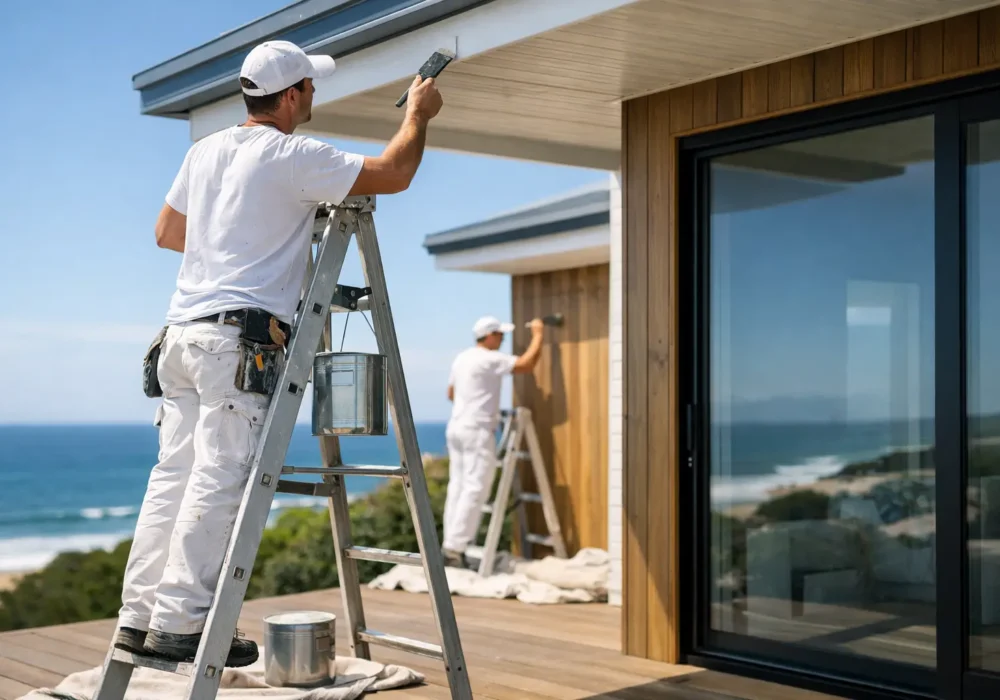
A Surf Coast home can look well cared for one season and tired the next. Salt in the air, strong UV, wind-driven rain and changing temperatures all put pressure on painted surfaces, particularly weatherboards, timber trims, fascia boards and external doors. Choosing exterior painters Surf Coast homeowners can rely on is about more than fresh colour. It is about protecting the building properly, finding problems early and completing the work with care.
A quality exterior repaint should make a property look sharp, but its real value is in the preparation beneath the paint. When washing, repairs, filling, sanding, priming and sealing are handled thoroughly, the finished coating has the best chance of standing up to local conditions. Skipping those steps may save time at the start, but it can lead to peeling paint, moisture damage and an earlier repaint.
What Exterior Painters on the Surf Coast Need to Get Right
The Surf Coast has a climate that asks more of exterior paintwork. Coastal properties can be exposed to salt spray and regular wind, while inland areas still receive plenty of harsh sun and seasonal rain. Paint systems need to suit the surface and the level of exposure, rather than being selected on colour alone.
Weatherboard homes are a good example. Timber moves as conditions change, so open joins, cracked boards and failed sealant need attention before painting begins. If moisture gets behind the coating, paint can lift and timber may begin to deteriorate. A professional painter will assess the condition of the boards, address minor damage where possible and seal gaps to help keep water out.
Masonry, rendered walls, metalwork and previously painted cladding each need a different approach. Some surfaces require a specific primer for adhesion. Others need more extensive cleaning to remove chalking paint, dirt, mildew or salt residue. There is no one-size-fits-all exterior paint job, which is why an on-site inspection is valuable before a quote is prepared.
Preparation Is Where a Lasting Finish Begins
The most visible part of painting is the final coat, yet much of the important work happens before a brush or roller applies the chosen colour. Exterior surfaces need to be clean, dry and stable. Painting over loose material or contamination simply locks a problem under a new coating.
A careful preparation process commonly includes pressure washing or hand washing where appropriate, scraping and sanding loose paint, filling cracks and damaged areas, gap sealing around trims, and spot priming bare timber or repaired sections. Rotten or damaged timber should not be painted over and forgotten. Minor carpentry repairs to boards, trims and other affected areas can make a meaningful difference to both the appearance and protection of the home.
Preparation also gives property owners a clearer picture of their building’s condition. Hairline cracks around windows, failed sealant, soft timber and rust marks can all be signs that attention is needed. Not every issue calls for major repairs, but dealing with small defects before painting can prevent a more expensive job later.
For commercial properties, the same principle applies. A shopfront, school building, office, place of worship or managed property needs a finish that presents well, but it also needs to withstand regular use and local weather. Proper surface preparation supports a durable result and reduces disruption from avoidable maintenance.
Choosing Colours for Coastal Homes and Businesses
Colour has a practical role outdoors. Lighter colours can help reduce heat absorption on exposed walls, while darker shades may create a strong architectural look but can show fading sooner on surfaces facing intense sun. The right choice depends on the property, its aspect, surrounding landscape and the look you want to achieve.
For heritage homes or established weatherboard properties, a considered palette can retain character without making the house feel dated. Modern homes may suit clean whites, soft greys, warm neutrals or carefully chosen contrast colours on doors, eaves and trims. Colour matching is also useful when only part of a property needs repair or repainting and you want the new work to blend with existing areas.
It is worth viewing sample colours outdoors at different times of day. Morning light, afternoon sun and overcast conditions can make the same colour appear noticeably different. A painter can help you consider how colours will sit across large wall areas, not just on a small swatch.
Timing an Exterior Repaint Properly
Many homeowners wait until paint is peeling badly before arranging work. By then, the preparation may be more involved and there may be underlying timber or moisture issues to address. It is usually better to plan a repaint when the coating is fading, becoming chalky or beginning to show small cracks.
The best timing also depends on the weather forecast and the condition of the surface. Paint needs suitable temperatures and dry conditions to cure as intended. Experienced painters monitor the forecast, organise the work in sensible stages and avoid rushing coatings onto damp or unsuitable surfaces.
If you are renovating, it can be practical to coordinate exterior painting after repair work, replacement windows, guttering upgrades or carpentry changes are complete. This avoids unnecessary touch-ups and helps ensure new elements are coated and sealed correctly. Landlords and property managers may also benefit from scheduling maintenance between tenancies or during quieter periods for commercial premises.
What to Expect From a Professional Exterior Painting Job
A reliable painting contractor should make the process straightforward. That starts with listening to what you need, inspecting the property and explaining the work required in plain language. A detailed quote should identify the areas to be painted, preparation work, repair allowances where relevant, and the type of finish proposed.
Once work begins, communication matters. You should know when the team will be on site, what areas will be affected and whether weather may change the schedule. Respect for the property is equally important. Paths, garden areas, windows and outdoor furniture should be protected where needed, while the work area should be kept tidy throughout the project.
The final result should include clean lines, even coverage and a finish that suits the property. Just as importantly, rubbish, masking materials and paint-related mess should be removed at completion. A fresh exterior should leave your home or premises looking cared for, not leave you with a clean-up job of your own.
Why Owner-Led Work Makes a Difference
With a large exterior repaint, details can easily be missed when responsibility is passed between several people. Owner-led service provides a direct point of contact from the quote through to completion. It supports clearer decisions around colours, preparation, access and the small repairs that often arise once surfaces are inspected closely.
Seaview Painting Services brings more than 25 years of experience to residential and commercial painting across the Surf Coast and surrounding areas. Jason takes a practical, hands-on approach to each project, with thorough preparation, dependable communication and a focus on a finish that lasts.
Whether the job is a full house repaint, weatherboard restoration, deck staining, external doors and trims, or a commercial refresh, the best result comes from matching the paint system and preparation to the building. A cheaper quote can be tempting, but compare the scope of work carefully. If washing, sanding, priming, sealing and repairs are excluded, the final price may not reflect the standard of protection your property needs.
A well-maintained exterior protects more than paintwork. It helps preserve the timber, presentation and value of the property you have worked hard to own or manage. When you are ready to refresh it, a no-obligation quote is a sensible first step towards a finish you can feel confident about every time you arrive home.