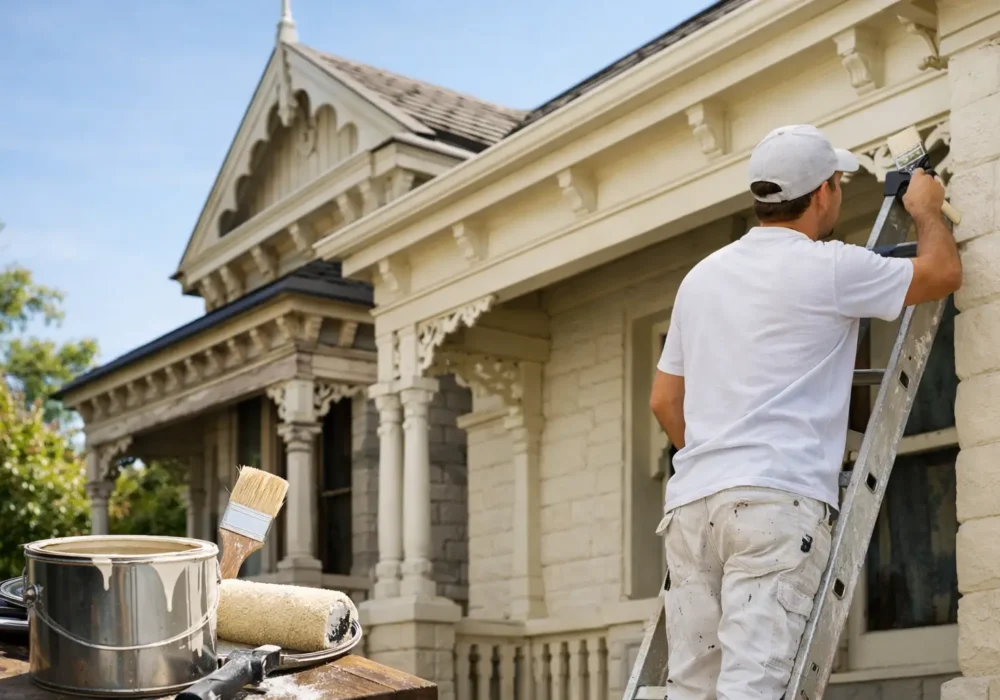
A heritage home can look tired long before it is beyond repair. Peeling paint, cracked putty and weathered boards are common, but the wrong preparation or colour choice can take away the very character that makes the property special. Knowing how to paint heritage house exterior surfaces starts with treating the job as restoration work, not simply applying a fresh coat.
Whether your home is a Victorian weatherboard, Edwardian cottage, interwar bungalow or an older shopfront, the best result comes from careful assessment, sound repairs and a coating system suited to the building’s materials and exposure.
Start with the heritage controls and original details
Before selecting colours or setting up a ladder, check whether the property is heritage listed or located in a heritage overlay. Local planning controls may affect visible external changes, particularly to façade colours, decorative trim, fences, verandahs and replacement timberwork.
This does not mean a home must remain exactly as it is. Many heritage properties can be repainted in a new scheme, but it is wise to understand what is permitted before work begins. If the home is part of a streetscape with a recognised period character, a sympathetic colour palette will usually protect both its appeal and value.
Take clear photos of the existing exterior from every angle. Look closely at fretwork, turned posts, window sashes, eaves, gable details, doors, chimneys and original signage. These details often require different preparation and brushwork from broad weatherboard walls. Record where colours change too. Heritage homes commonly use a main wall colour, a deeper trim colour and an accent colour on doors, sashes or decorative features.
Assess the exterior before you paint
Paint only performs as well as the surface beneath it. An old coating that is chalky, blistered or lifting needs attention before any topcoat goes on. Walk around the house and inspect it in good daylight, including lower boards near garden beds, south-facing walls, under eaves and exposed western elevations.
Look for flaking paint, open joints, rotten timber, loose boards, rusted nails, failed sealant, cracked glazing putty and water staining. These are not just cosmetic issues. Moisture entering behind the paint film can keep causing failure after a repaint unless the underlying cause is fixed.
Pay particular attention to gutters, downpipes, flashings and overflowing roof drainage. A beautifully painted weatherboard wall will not stay that way if water regularly runs down it. Minor carpentry repairs, replacement of damaged timber and correct gap sealing should happen before painting, not after it.
Take old paint seriously
Many heritage homes have multiple layers of old paint, and some may contain lead. If the age or history of the coating is unknown, have it tested before sanding, scraping or using heat. Lead paint dust is hazardous, especially around children, pets and vegetable gardens.
Avoid dry sanding large areas, high-pressure washing deteriorated lead coatings or creating dust that can travel across the property. A professional painter can plan suitable containment, preparation and clean-up methods. This is one part of heritage painting where taking shortcuts is simply not worth the risk.
Wash, repair and prepare each surface properly
Thorough preparation is the difference between paint that looks good for a season and a finish that protects the home for years. Exterior surfaces collect dirt, salt, mould, cobwebs and chalky residue, all of which can affect adhesion.
Begin by washing the house with an appropriate exterior cleaner. Low-pressure washing is often suitable for weatherboards and masonry, but pressure must be controlled around old timber, windows, mortar, vents and decorative joinery. Too much pressure can force water behind boards, damage soft timber or strip fragile paint unnecessarily.
Once dry, remove loose and unsound paint by scraping and sanding only to the extent required. The aim is to create a stable, feathered edge between sound existing paint and bare areas. Stripping every old coating back to bare timber is not always necessary, and on a large heritage home it can add significant cost and disruption. It may be appropriate where coatings have failed extensively, but sound paint can often be retained and prepared.
Fill small imperfections with an exterior-grade filler, replace decayed timber where needed, and set or treat protruding nails. Flexible exterior sealant belongs in gaps around trims and joins that move slightly, but it should not be used to hide major defects or block drainage paths. Let all fillers and sealants cure fully before priming.
Prime bare timber, metal and repairs
Primer is not an optional extra on exposed areas. Bare timber, patched sections, knots, replacement boards, rusty metal and repaired trim each need a compatible primer so the finish coats bond evenly and last longer.
For weatherboards, spot-priming bare timber is commonly enough when most of the old paint remains sound. Where the coating is badly weathered or colour changes are dramatic, a full undercoat can provide a more consistent base. On old window frames and doors, take extra care around end grain, joints and lower rails, where moisture tends to sit.
Choose primers and topcoats as a complete system. Mixing products without checking compatibility can lead to adhesion problems, flashing or early failure. The right system will depend on the existing coating, the substrate and how much sun, rain and salt air the home receives.
Choose colours that respect the home and its setting
Heritage colour schemes should complement the age and architecture of the building without making it look like a museum piece. Softer neutrals, earthy greens, muted blues, warm creams, charcoals and deeper heritage reds can all work well, depending on the period and surrounding streetscape.
A restrained palette is often more effective than using every decorative feature as a colour change. Generally, the wall colour should sit quietly, while trim and front-door colours provide definition. Dark colours can add elegance to verandah posts and trims, but on sun-exposed elevations they absorb more heat and may show movement or imperfections sooner.
Always test sample colours on more than one wall. Exterior colour changes dramatically between morning and afternoon, in full sun and shade, and beside brickwork, roofing and established gardens. A colour that looks right on a small card indoors can appear much lighter outside.
Apply paint for a durable, even finish
Painting conditions matter. Avoid working on very hot surfaces, in strong wind, when rain is expected, or when surfaces are damp from dew. In coastal areas around Hobsons Bay, the Bellarine and Surf Coast, salt exposure and changing weather make timing especially important.
Work from the top down, starting with eaves, fascia boards and high trims before walls and lower details. This reduces the chance of marking freshly painted areas. Brush decorative timber, window frames and tight edges carefully, then use a roller on broader weatherboard sections for an even finish. Maintain a wet edge where possible to avoid lap marks.
Most exterior systems need two finish coats for reliable coverage and protection. Allow the recommended drying time between coats rather than rushing the job because the surface feels touch-dry. Paint needs the right conditions to cure properly, particularly on timber that expands and contracts through Melbourne’s changing seasons.
Doors, sashes and operable windows need special care. Do not paint joints shut, and allow sufficient curing time before closing painted doors or windows. A neat finish should still leave the building functioning as it should.
Plan for maintenance rather than waiting for failure
A heritage exterior is easier and more affordable to maintain when small problems are dealt with early. Wash down cobwebs and grime periodically, keep garden growth away from walls, clear gutters, and inspect paintwork after winter or severe weather.
Look for early signs of trouble such as cracking along board edges, bubbling near downpipes, soft timber at the base of posts or opening sealant around windows. Addressing a small repair and repainting a localised area can prevent a much larger restoration later.
For homes with detailed timberwork, high access areas or uncertain old coatings, professional preparation is often the sensible investment. Seaview Painting Services brings owner-led attention to repairs, surface preparation and clean completion, helping heritage homes retain their character while standing up to local conditions.
A heritage repaint should make people notice the home, not the paint job. Give the timber, details and original proportions the care they deserve, and the finished exterior will feel like it has always belonged there.