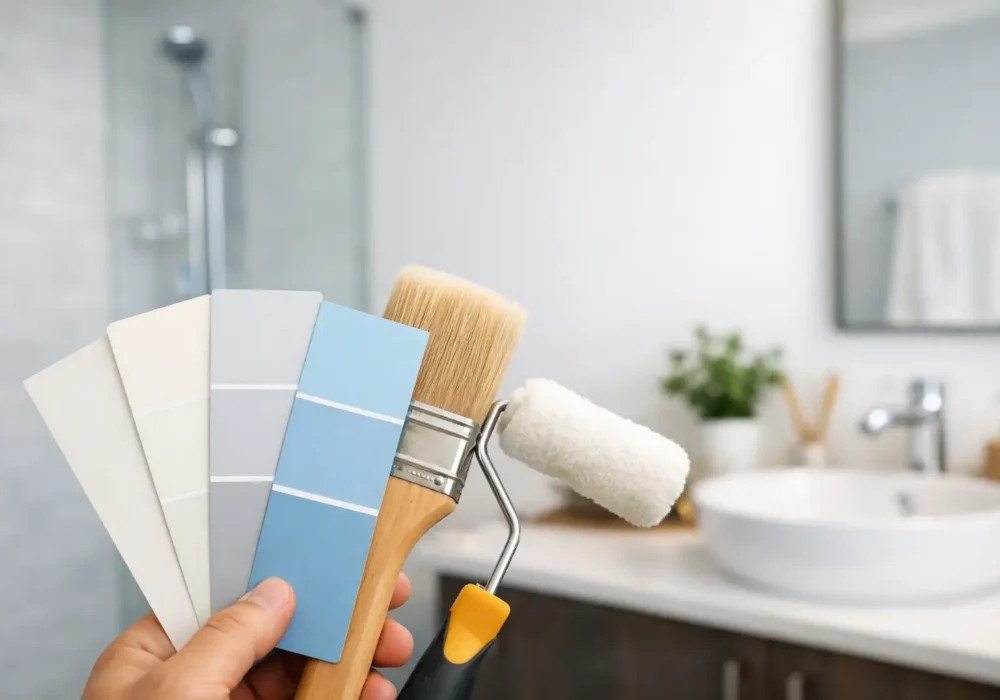
The best paint finish for bathroom walls is usually satin or a quality bathroom-specific low-sheen paint. Both offer a practical middle ground: they resist moisture better than flat finishes, are easier to wipe down, and do not highlight every small imperfection the way a glossier paint can.
Bathrooms put paint under more pressure than almost any other room in the house. Daily steam, condensation, splashes, soap residue and limited ventilation can all take their toll. Choosing the right finish matters, but so does preparing the surface properly and using a paint designed for wet areas.
Why paint finish matters in a bathroom
Paint finish, also called sheen level, refers to how much light the painted surface reflects. The higher the sheen, the more reflective and generally more washable the surface will be. High-sheen paints can be useful in wet areas, but they are not automatically the best choice for every bathroom wall.
A glossy wall can look hard and shiny under bathroom lighting. It also draws attention to roller marks, patching, uneven plaster and older wall surfaces. At the other end of the scale, a completely flat or matt finish has a soft appearance but can be harder to clean and more vulnerable to moisture staining if it is not specifically formulated for bathrooms.
The aim is to choose a finish that looks right for the room while standing up to the way the bathroom is actually used.
Satin is often the best paint finish for bathroom walls
For most homes, satin provides the best balance of durability, washability and appearance. It has a gentle sheen rather than a pronounced shine, so it reflects some light without making walls look glossy. This makes it a good option for family bathrooms, ensuites and powder rooms.
Satin-finish bathroom paint is generally easier to clean than standard low-sheen paint. Marks around light switches, splashes near the vanity and the occasional toothpaste flick can usually be wiped away without damaging the finish, provided the paint has cured properly.
It is also a sensible choice in bathrooms with a shower over the bath, busy family use or less-than-ideal ventilation. The higher sheen gives the coating a tighter surface, helping it resist moisture and grime. That said, no wall paint should be treated as a substitute for proper waterproofing or tiled splashback areas.
When bathroom low sheen is the better choice
A premium bathroom low-sheen paint can be an excellent alternative, especially if you prefer a softer, more contemporary look. Modern low-sheen wet-area paints are designed to handle humidity and are often formulated with mould-resistant properties. They can be a very good fit for larger bathrooms, newly renovated spaces and walls with minor surface imperfections.
Low sheen is less reflective than satin, which helps conceal small flaws in older plaster, repaired wall sections or uneven surfaces. This is particularly valuable in established homes where light from a window or downlights can expose every ripple in the wall.
The trade-off is that low sheen may not be quite as scrub-resistant as satin, depending on the product. For a lightly used ensuite with good exhaust ventilation, that difference may not matter. For a main family bathroom, satin may offer more day-to-day forgiveness.
Always compare the actual paint product rather than relying only on the sheen name. Sheen levels can vary between manufacturers, and a bathroom-specific low sheen may perform better in a wet area than a standard satin wall paint.
Is semi-gloss suitable for bathroom walls?
Semi-gloss is durable, highly washable and moisture resistant, so it can certainly be used on bathroom walls. It was once the standard choice for many bathrooms, particularly in older homes. However, it is not always the most attractive or practical option for full wall areas.
Because semi-gloss reflects more light, it can make wall imperfections more obvious. It may also create glare under bright vanity lights and make a small bathroom feel more clinical than relaxed. For this reason, semi-gloss is often better reserved for doors, trims, window frames and skirting boards.
There are exceptions. A small commercial washroom, a rental property requiring particularly hard-wearing surfaces, or a bathroom with very smooth walls may suit semi-gloss. The key is honest surface assessment. A gloss level that looks excellent over carefully prepared plaster can look disappointing over poorly filled cracks, old patching or uneven paintwork.
Avoid standard matt paint in wet areas
Standard matt or flat wall paint is rarely the right choice for a bathroom. It gives walls a modern, low-reflective appearance, but it can absorb moisture and be difficult to clean. Repeated wiping may leave shiny patches, while condensation can contribute to staining or mould growth.
Some manufacturers produce washable matt or bathroom matt products. These can work in a well-ventilated powder room or a bathroom where walls are not exposed to regular steam. Still, for a shower bathroom, satin or a purpose-made low-sheen bathroom paint is generally the safer long-term choice.
Choose a bathroom paint, not just a paint finish
The sheen is only part of the decision. A paint labelled for bathrooms, kitchens or wet areas is formulated to better handle humidity, cleaning and mould risk. It may include additives that resist mould growth and create a more durable, washable film once cured.
This does not mean mould cannot return if there is an underlying ventilation or moisture issue. Persistent mould around ceilings, cornices or walls can point to an ineffective exhaust fan, a plumbing leak, poor insulation or condensation problems. Painting over it without treating the cause is a short-term cosmetic fix.
Before painting, affected areas should be cleaned correctly, allowed to dry fully and sealed where required. Any peeling paint, loose material, gaps or damaged plaster should also be repaired. Good preparation gives the finish something sound to bond to and helps prevent early failure.
Do not use wall paint in the shower recess
Even the best bathroom wall paint is not designed for direct, constant water exposure inside a shower recess. Those areas need suitable waterproofing and finishes such as tiles, glass or an approved wet-area lining system.
Paint can be used on bathroom walls outside the direct splash zone, including around a vanity or toilet, provided the appropriate paint system is used. If the vanity sits against a painted wall and receives regular splashes, a tiled or otherwise protected splashback is often worth considering.
The same principle applies to ceilings. Bathroom ceilings experience steam and condensation but should usually be painted with a mould-resistant ceiling paint in a low-sheen or matt finish. A glossy ceiling tends to look harsh and can show imperfections. Proper extraction is far more useful than increasing the ceiling sheen.
Preparation makes the finish last
A quality paint finish cannot hide poor preparation for long. In bathrooms, preparation often involves washing down soap residue and surface contaminants, removing loose or flaking paint, sanding glossy areas for adhesion, filling cracks and dents, sealing gaps, and spot-priming repairs or stains.
If previous paint is peeling, the reason needs to be addressed before repainting. Common causes include painting over damp walls, inadequate cleaning, no primer on repaired surfaces, or applying incompatible coatings. A professional painter will assess the existing surface rather than simply coating over the problem.
Ventilation should also be part of the plan. Run the exhaust fan during showers and for a period afterwards, open a window where practical, and repair leaks promptly. These simple habits reduce condensation and help preserve both the paintwork and the room beneath it.
Colour and sheen work together
Lighter colours are a reliable choice for bathrooms because they help smaller spaces feel open and reflect available light. Warm whites, soft greys, muted greens and gentle blue tones can all work well, depending on the tiles, vanity and natural light.
Darker colours can be effective too, particularly in a powder room or a well-lit ensuite, but they tend to reveal water marks more easily. In a dark shade, satin can provide a pleasing depth, while excessive gloss may make the colour look uneven across the wall.
Test samples in the bathroom itself before committing. A colour that looks calm in a showroom can appear much cooler under LED lighting or dramatically different beside existing tiles. Look at it during the day and at night, and view it on a properly prepared section of wall rather than only on a small paint card.
A practical choice for a better-looking bathroom
For most bathroom repaints, choose a quality satin or bathroom low-sheen paint for the walls, a suitable mould-resistant ceiling paint overhead, and semi-gloss for trims and doors where extra durability is useful. The final choice should account for the room’s ventilation, the condition of the walls and how hard the bathroom works each day.
Seaview Painting Services takes the time to prepare bathroom surfaces properly, repair minor issues where needed and recommend a finish that suits the room rather than applying a one-size-fits-all solution. A carefully selected paint system, applied over a clean and sound surface, keeps a bathroom looking fresh long after the brushes and drop sheets are packed away.