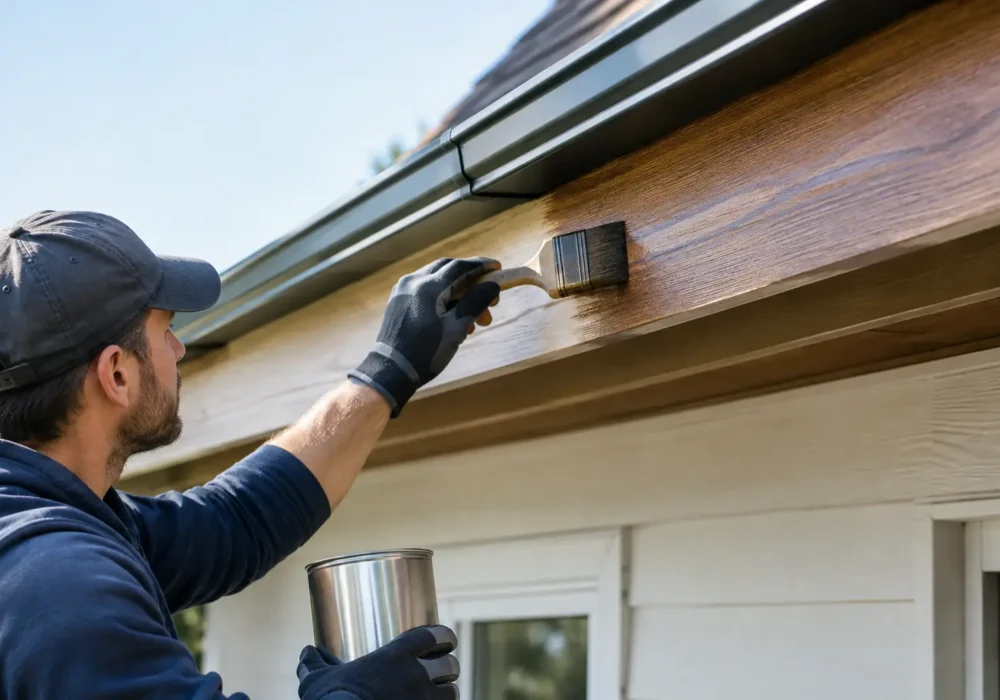
A peeling fascia board can make an otherwise well-kept home look tired, but the concern is more than cosmetic. Fascia sits at the roof edge, supporting gutters and shielding the ends of roof timbers from weather. When paint fails, water can work into exposed grain, joints and nail holes. Timber fascia restoration addresses that damage before a small maintenance job turns into loose gutters, widespread rot or costly replacement.
For homes across Wyndham, Hobsons Bay, Geelong, the Bellarine and the Surf Coast, fascia boards take a regular battering from sun, wind-driven rain and, in coastal areas, salt in the air. A sound restoration combines careful timber repairs with the right preparation and exterior coating system. Painting over a problem may improve the appearance for a short time. Proper preparation is what gives the finish its staying power.
When does timber fascia restoration make sense?
Restoration is a good option when the fascia is largely sound but has isolated areas of deterioration. Flaking paint, light surface checking, small splits, open joins and localised soft timber can often be repaired, filled, sealed and repainted successfully. This retains the existing character of the home, which can be particularly worthwhile on older weatherboard homes and heritage-style properties.
The key question is how far moisture damage has travelled. Timber that is soft only at an exposed end or below an overflowing gutter may be repairable. If a screwdriver easily sinks into long sections of the board, the timber is crumbling, or the gutter brackets are no longer firmly supported, replacement of the affected lengths is usually the more sensible choice.
A close inspection also looks beyond the visible face of the fascia. Water may be entering from a blocked gutter, a missing roof flashing, cracked capping, failed gutter seal or a poorly detailed join. Repairing and painting the timber without addressing the moisture source can lead to the same failure returning far too soon.
The right process for timber fascia restoration
A durable result begins with access and assessment, not the paint tin. Fascia work is often carried out at height and close to roof edges, so safe access is essential. It also allows the timber, eaves, gutter line and roof junctions to be inspected properly rather than guessed at from ground level.
The surface is then washed to remove dirt, chalking paint, salt residue, cobwebs and mould. On older homes, this stage can reveal the true condition of the timber. Loose and failed paint is scraped away, sound edges are feather-sanded, and bare timber is prepared so the primer can bond evenly.
Minor carpentry repairs come next. Depending on the condition, this may involve cutting out a decayed section, fitting new timber, securing loose boards, replacing damaged mouldings or repairing small holes and splits with an appropriate exterior-grade filler. Open joins and gaps are sealed where needed to reduce water entry while still allowing the building materials to move naturally with changing temperatures.
Bare timber and repaired areas need a suitable primer. This is especially important around end grain, patched sections, knots and places where the original coating has broken down. Primer helps stabilise the surface and creates a sound base for the finishing coats. Skipping it can leave repairs visible and shorten the life of the paint system.
Once primed, the fascia is coated with quality exterior paint chosen for the surface, exposure and desired sheen. Two properly applied finishing coats generally provide better coverage, colour consistency and protection than one heavy coat. The aim is a clean, even roofline that looks sharp from the street and stands up to the weather.
Why gutters and fascia need attention together
Fascia and gutters work as one system. Even excellent paint cannot protect timber that is repeatedly soaked by a leaking gutter joint or overflowing water. Before restoration, check that gutters are clear of leaves, dirt and roof debris, and that downpipes are flowing freely. Look for water marks below the gutter line, drips at joins and sections that appear to hold water rather than drain.
Gutter brackets deserve attention too. They are fixed through the fascia, and movement can enlarge fixing holes or crack paint around them. Where brackets have loosened because the timber behind them has deteriorated, a simple repaint is not enough. The fascia needs repair or replacement so the gutter can be properly supported again.
On some properties, gutter removal is needed to access hidden timber damage or produce a more complete finish. On others, careful preparation and painting around the gutter is suitable. It depends on the gutter condition, how much fascia is exposed and whether there are signs of decay behind the gutter line. A practical assessment should recommend only the level of work the property actually needs.
Common shortcuts that shorten the life of the job
The most common issue is coating over peeling paint. New paint adheres only as well as the layer beneath it, so loose old coatings need to be removed or stabilised first. Heavy paint application can also bridge cracks temporarily without sealing the timber properly, leading to early splitting and peeling.
Another shortcut is filling soft, wet or rotten timber without removing the affected material. Filler has a place for small surface repairs, but it cannot restore structural strength to extensively decayed wood. The same applies to caulking every gap indiscriminately. Some building joints need to be sealed, while others require room for moisture drainage or normal movement.
Colour selection can affect longevity as well as appearance. Very dark colours on highly exposed fascia can absorb more heat, which increases expansion and contraction in the timber and coating. This does not mean dark colours are never suitable, but they need to be considered alongside the timber condition, house orientation and paint specification.
Looking after restored fascia boards
A quick check twice a year can prevent a great deal of damage. After autumn leaf fall and again before the wetter months, inspect gutters and downpipes, particularly around large trees. From the ground, look for paint lifting at joins, dark staining, sagging gutters or areas where the fascia line appears uneven.
Keep an eye on the first signs of coating failure. Small chips and opened joints are far easier to deal with than timber that has been wet for several seasons. Washing exterior surfaces periodically also helps remove grime and salt deposits that can dull paint and hold moisture against the coating.
If you are planning a full exterior repaint, include the fascia in the condition assessment rather than treating it as an afterthought. It frames the roofline and ties together gutters, eaves, weatherboards and trim. Restoring it at the same time often produces a neater result and allows minor timber repairs to be completed before the final exterior colours go on.
A considered approach to a better roofline
Good fascia work is measured in the details that are easy to miss from the footpath: sound timber beneath the paint, sealed vulnerable edges, tidy joins, firm gutter fixings and a consistent finish along the roofline. Seaview Painting Services takes that preparation seriously, combining minor timber repairs with professional exterior painting so homeowners can protect the parts of the house that work hardest in bad weather.
If your fascia is peeling, stained or showing soft spots, it is worth arranging an assessment before the next wet season. A clear, no-obligation quote can identify whether careful timber fascia restoration is appropriate or whether targeted board replacement will provide the better long-term result.