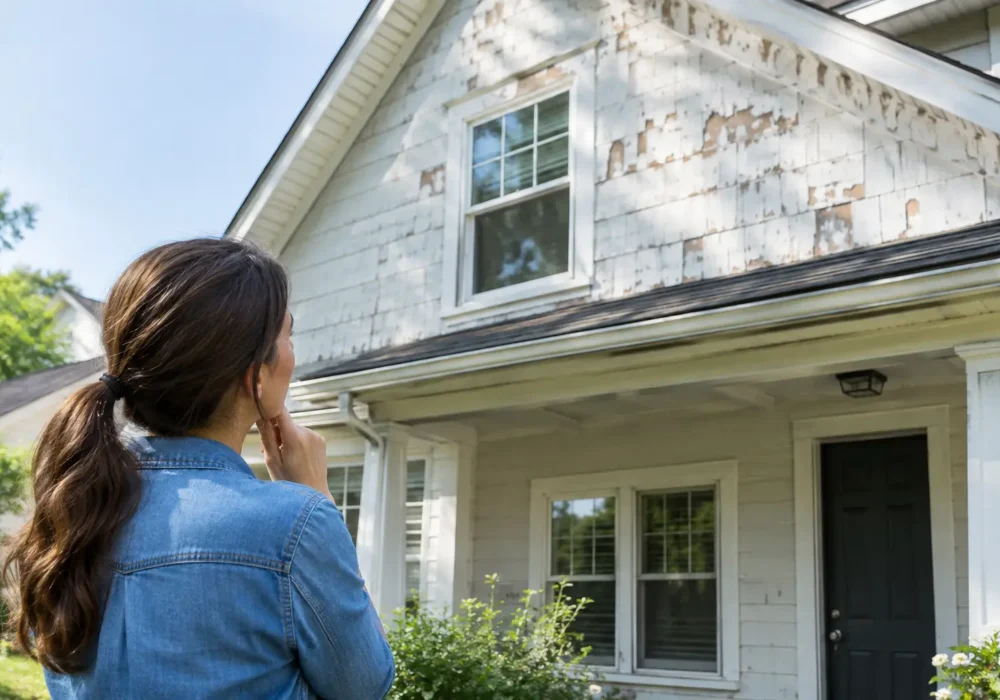
Paint rarely fails all at once. A weatherboard might start to look dull on one elevation, a window trim may develop fine cracks, or a hallway wall may no longer wipe clean. Knowing the signs your house needs repainting helps you act before small maintenance issues become more involved repairs.
For homes across Wyndham, Hobsons Bay, Greater Geelong, the Bellarine and Surf Coast, exterior paint works hard. Sun, salt air, wind and wet weather can all shorten the life of a coating, particularly on exposed timber. Inside, daily wear, moisture and marks from busy family life can leave rooms looking tired well before the rest of the house needs attention.
8 signs your house needs repainting
1. Peeling, flaking or bubbling paint
Peeling paint is one of the clearest signs that a repaint should not be put off. Once a coating lifts away from the surface, it no longer protects the timber, masonry or metal underneath. Water can then work its way behind surrounding paint and extend the problem.
Bubbling can be caused by moisture, heat, poor adhesion or painting over a surface that was not properly prepared. The answer is not simply to paint over the affected area. Loose material needs to be removed, the cause checked, and the surface sanded, filled or primed as required before new paint is applied.
2. Cracks around timber, trims and joins
Fine cracks in paint can seem cosmetic at first, but they often appear where timber expands and contracts or where old filler has broken down. Look closely around window frames, fascia boards, eaves, doors, weatherboards and exterior joins.
Small cracks can usually be addressed during preparation with careful sanding, filling and gap sealing. Wider gaps, soft timber or recurring cracking may point to movement, water entry or a repair that needs more attention before painting begins. A quality repaint should deal with the surface behind the paint, not just cover the visible line.
3. Faded or chalky exterior surfaces
If you run a hand over an outside wall and a powdery residue comes away, the paint may be chalking. This happens as coatings weather under UV exposure and gradually break down. Deep colours, north- and west-facing walls, and highly exposed coastal locations can show fading sooner than more protected parts of the home.
Fading alone does not always mean immediate failure, but it does reduce the home’s presentation and may signal that the coating is nearing the end of its useful life. Washing the surface can improve its appearance temporarily, but chalky paint must be properly cleaned and prepared before repainting or the new finish may struggle to bond.
4. Damp stains, mould or mildew keep returning
Mould and mildew are common on shaded exterior walls, under eaves, in bathrooms and around poorly ventilated areas. A proper wash may remove the visible growth, but repeated staining deserves a closer look. It could be related to moisture, inadequate ventilation, leaks, blocked gutters or paint that is no longer providing a sound protective surface.
Paint can help refresh and protect a correctly prepared area, but it cannot solve an active water problem. Any leak, failed flashing, overflowing gutter or ventilation issue should be addressed first. This approach prevents fresh paint from being damaged prematurely and helps deliver a finish that lasts.
5. Timber feels soft or looks weathered
Exterior paint is a protective layer for weatherboards, window trims, fascia boards and timber doors. When paint fails, timber may grey off, split, cup or become soft in vulnerable spots. Pay particular attention to lower weatherboards, window sills and areas close to garden beds where water can sit or splash back.
Not every damaged board means a major restoration project. Often, isolated sections of deteriorated timber or trim can be repaired or replaced as part of the preparation work. Leaving it too long, however, can allow decay to spread and make the eventual job more costly. Early attention gives you more options.
6. Interior walls no longer clean up well
Interior paint should make everyday living easier. When walls show permanent scuffs, greasy marks, handprints or uneven patches that do not clean off, a repaint can make a remarkable difference to how a room feels. High-traffic spaces such as entryways, hallways, kitchens, laundries and children’s rooms usually show wear first.
Watch for stains around light switches, furniture rub marks and patchy touch-ups that no longer match the surrounding wall. In some cases, a targeted room repaint is enough. If several rooms have aged at the same rate, repainting the interior together can provide a more consistent result and reduce the disruption of organising separate jobs over time.
7. Doors, skirtings and trims look yellowed or chipped
White doors and trims are often the first interior surfaces to reveal age. They collect knocks, shoe marks and fingerprints, while older coatings can yellow, especially in rooms with limited natural light. Chips around door edges and skirtings also make an otherwise tidy room feel unfinished.
Repainting trims requires more care than it appears. Surfaces need cleaning and sanding, chips need filling, and floors and furnishings need proper protection. The sheen level matters too. A finish that is too flat may mark easily, while one that is too glossy can draw attention to surface imperfections. Selecting the right product for the room and preparing it thoroughly makes the difference.
8. You are preparing to sell, lease or renovate
A repaint is often one of the most practical ways to improve presentation before a sale, new tenancy or renovation. Fresh, well-chosen colours can make rooms feel cleaner and brighter, while tidy external paintwork gives buyers, tenants and visitors confidence that a property has been cared for.
Timing matters. If you are selling soon, a neutral, well-executed repaint may be more useful than a major colour change. For a long-term renovation, you may have more freedom to choose colours that suit your furniture, landscaping and the character of the home. Either way, paintwork should be scheduled after dusty repair work and before final styling, flooring or cabinetry installation where possible.
When should you repaint rather than patch?
Patching is sensible when damage is isolated and the existing paint is still sound, clean and close to the same colour. A single scrape on a wall, a minor chip on a door frame or a small weatherboard repair may not require a whole-house repaint.
A broader repaint is usually the better investment when problems are appearing across several elevations or rooms, when colour matching is difficult, or when the old coating is failing in more than one place. Repeated small touch-ups can become noticeable, particularly on faded external walls. It can also mean the same preparation work is being repeated without resolving the overall condition of the paint system.
For exterior work, avoid judging the job by appearance alone. A house can look reasonably presentable from the street while paint is cracking in joints, timber is exposed beneath eaves, or moisture is affecting the less visible side of the property. A close inspection is worthwhile before deciding how much work is needed.
Preparation is what gives a repaint its value
The finish coat gets the attention, but preparation determines how well it performs. Washing removes dirt, salt residue and loose material. Sanding smooths rough edges and improves adhesion. Filling, gap sealing, priming and minor carpentry repairs create a stable base for the new coating.
This is especially relevant for older weatherboard homes and properties close to the coast, where surfaces can be exposed to more demanding conditions. Skipping preparation may save time at the start, but it often leads to early peeling, visible flaws and an uneven finish.
Seaview Painting Services approaches house repaints with this practical focus, from assessing paint problems and preparing surfaces through to protecting the work area and leaving the property clean on completion. For homeowners, landlords and property managers, clear communication about what needs attention helps make the right decision for the building and the budget.
If you are noticing a few of these warning signs, take a walk around the property in good daylight and make note of where they appear. Acting while the issue is still localised can protect the home, preserve its presentation and keep the repainting process far more straightforward.