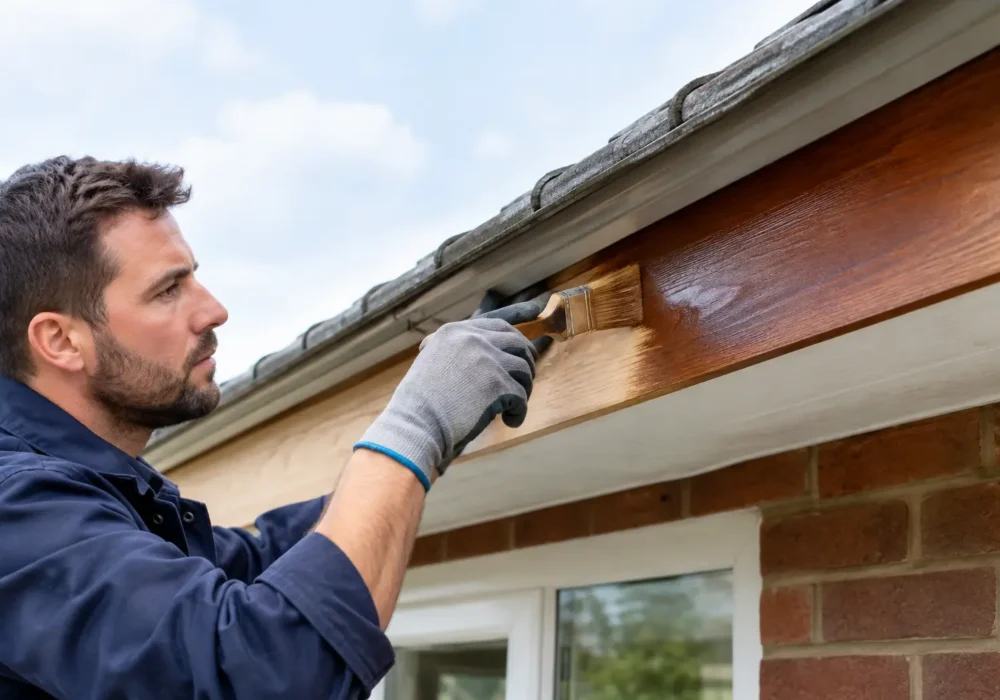
Timber fascias do a quiet but demanding job. Running along the roofline behind the gutters, they help support a neat exterior appearance while taking the full force of sun, wind and rain. When paint breaks down or gutters overflow, small failures can quickly become soft timber, peeling coatings and costly repairs. This guide to restoring timber fascias explains what a sound repair involves, when painting is enough, and when damaged sections need to be replaced.
For homes across Wyndham, Hobsons Bay, Greater Geelong, the Bellarine Peninsula and Surf Coast, exposure matters. Coastal air, driving rain and strong summer sun can shorten the life of exterior coatings, particularly on older homes where fascias have been painted several times before. Restoring them properly is less about applying a fresh topcoat and more about finding and fixing the reason they deteriorated.
Start by finding the cause of the damage
A fascia that is peeling or stained is not always rotten, but it should be inspected closely before any paintwork starts. Look along the full roofline for blistering paint, open joins, dark water marks, cracked timber, sagging gutter brackets and areas that feel soft when gently tested. Pay particular attention to corners, mitres, downpipe locations and sections behind overflowing gutters.
Water is usually the underlying issue. Blocked gutters, poorly positioned downpipes, leaking roof flashings and overflowing valleys can repeatedly wet the same length of timber. Painting over the evidence without correcting the water source may make the fascia look better for a short time, but the new coating will not hold up.
It is also worth checking whether the gutter sits too close to the fascia or has been installed with inadequate fall. This is work for the appropriate roofing or plumbing trade, but identifying it early helps prevent a painting repair from being undone. A professional painter can assess the timber condition and advise where another trade needs to be involved before restoration begins.
When can timber fascias be restored?
Sound timber with failed paint can usually be restored. If the surface is weathered, chalky, lightly cracked or has localised flaking, thorough preparation, filling, priming and repainting can give it many more years of service. Small splits and nail holes are also commonly repairable once the area is dry and stable.
Rot is different. Timber that can be pressed in with a scraper, breaks away in fibres or has lost its straight edge is no longer a reliable surface for paint. Localised decay may allow for a minor carpentry repair or replacement of a short section. Where rot extends behind gutter brackets, across joins or through long lengths of fascia, replacing the affected timber is normally the sensible option.
The decision depends on the extent and location of the damage. A small repair can be economical, while trying to patch widespread decay often costs more over time. Good restoration protects the property, but it should not disguise a timber problem that will continue to spread.
Preparing timber fascias for a lasting finish
Preparation is where the quality and lifespan of a fascia restoration are decided. Exterior paint needs a clean, dry and stable surface to bond correctly. Rushing this stage is one of the main reasons freshly painted fascias peel after a season or two.
First, the fascia should be washed to remove dirt, salt residue, cobwebs, mould and loose chalky paint. In coastal and exposed locations, salt contamination can be easy to miss but can interfere with adhesion. Areas affected by mould should be treated appropriately, then allowed to dry fully.
Loose and failing paint is scraped back to a firm edge. The remaining coating is sanded to smooth sharp edges and create a suitable surface for primer. This does not always mean stripping every painted surface back to bare timber. If existing paint is well bonded and in good condition, it can remain as part of the paint system. The key is removing anything loose, brittle or poorly adhered.
Repairs, filling and gap sealing
Once the timber is exposed and clean, defects become easier to assess. Minor dents, shallow checks and old fixing holes can be filled with a suitable exterior-grade filler. Larger cracks may need a more substantial repair method, while open joints should be sealed with a flexible exterior sealant where appropriate.
Not every gap should be filled. Fascias and gutters need to shed water, and sealing a drainage path can trap moisture where it does the most harm. This is why experience matters around rooflines. The goal is to close vulnerable joins and prevent water entry, not to create a sealed pocket behind the gutter.
Any repair compound needs adequate curing time before sanding and priming. Painting over uncured filler or damp timber can lead to cracking, staining or early coating failure. Weather conditions also matter. Cold, wet days and very hot direct sun can affect drying times and paint application.
Priming bare timber and repaired areas
Bare timber should be primed before topcoats are applied. Primer helps seal the surface, improves adhesion and creates a consistent base for the final colour. It is particularly important on end grain, cut edges, repaired sections and timber that has been exposed after scraping.
A spot-prime approach may be suitable for small repairs where the surrounding coating is sound. If extensive sanding, weathering or bare timber is present, a full primer coat is often the better choice. This provides a more even foundation and reduces the risk of patchiness showing through the finish.
Primer selection depends on the condition of the timber, the existing coating and the paint system being used. A professional assessment is useful where there are tannin stains, water marks or uncertain previous coatings, as these can bleed through ordinary paint if they are not treated correctly.
Painting timber fascias with the right system
Fascias need an exterior paint system designed to cope with movement, weather and ultraviolet exposure. Most quality systems use a suitable primer followed by two finish coats, applied at the manufacturer’s recommended spread rate and drying intervals. One thick coat is not a substitute for two properly applied coats.
Colour also has a practical effect. Very dark colours can cause timber to absorb more heat and expand and contract more noticeably, especially on north- and west-facing elevations. Dark trims can look striking, but on older or highly exposed timber they may require closer maintenance and careful product selection.
Brushwork is often the best way to achieve a neat result around gutter brackets, eaves and tight roofline details. Larger accessible sections may be rolled or sprayed as part of an efficient system, but the finished coating still needs full, even coverage on edges and profiles. Missed end grain and thin paint on lower edges are common weak points because they are where water tends to sit.
Access and safety at the roofline
Fascia work is rarely a straightforward ground-level painting job. It can involve ladders, scaffold, elevated work platforms and working around gutters, power lines and uneven ground. The safest access method depends on the height of the property, roof pitch, site conditions and the length of fascia being restored.
Homeowners can safely monitor obvious signs of deterioration from the ground, but painting at height should not be treated as a casual weekend task. Falls are a serious risk, and leaning a ladder against a gutter can damage it or create an unstable working position. There is also the possibility of older paint containing hazardous materials, particularly on heritage or older properties. Where coatings are unknown or deteriorating badly, appropriate testing and safe work practices should be considered before sanding begins.
Maintaining restored fascias
Once fascias have been restored, a little routine attention can prevent another major repair. Gutters should be kept clear so water flows freely to downpipes, particularly after leaf fall and storms. Check for overflowing gutters during heavy rain, as this often reveals problems not visible on a dry day.
An annual look along the roofline can catch small issues early. Look for cracked sealant, lifted paint edges, rusting gutter brackets and fresh water stains. Dealing with one failed joint or a small area of peeling paint is far simpler than waiting until moisture has worked into the timber.
For properties near the coast, regular washing can also help remove salt and grime from painted trim. The maintenance schedule will vary with exposure, colour choice and the quality of previous work, but prompt touch-ups are always easier than widespread restoration.
A well-restored fascia should look crisp from the street, but its real value is in the preparation hidden beneath the paint. If you are unsure whether your timber needs repainting, repair or replacement, Seaview Painting Services can assess the condition, coordinate minor timber repairs and provide a clear, no-obligation quote. Addressing the problem while it is still localised can protect both your roofline and the home beneath it.