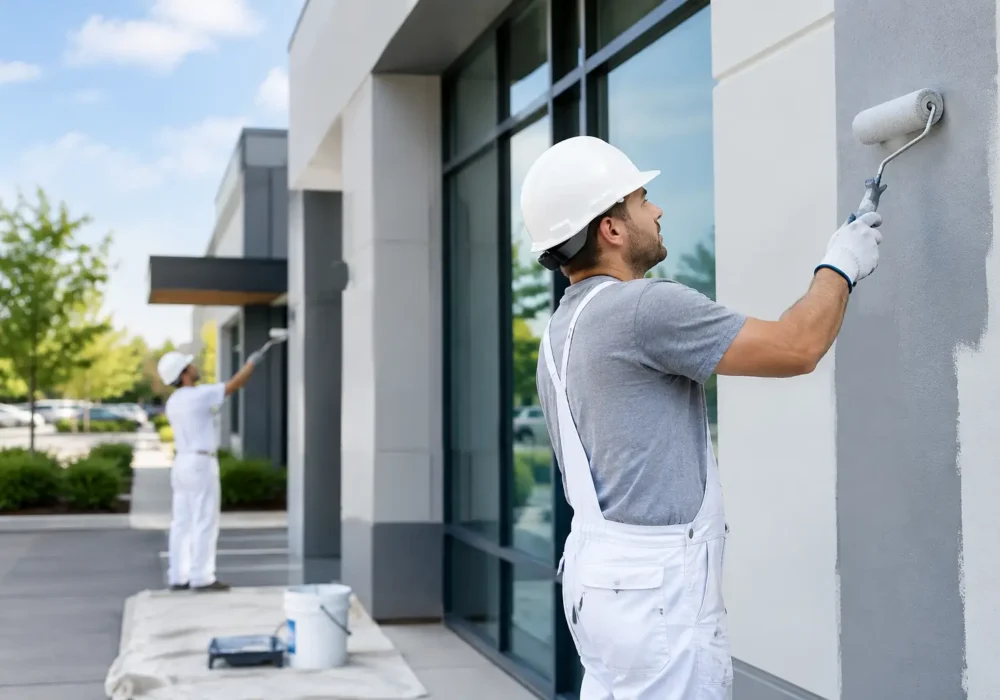
A commercial repaint is rarely just a matter of choosing a colour and booking painters. For a shop, office, school, strata property or place of worship, the work needs to protect the building, maintain a professional appearance and fit around the people using it. This commercial repainting guide sets out how to plan the job properly, avoid common disruptions and achieve a finish that lasts.
Start With the Reason for Repainting
The best scope of work begins with the condition of the property, not the paint colour. Faded exterior paint, peeling coatings, water marks, scuffed corridors and deteriorating timber are all signs that attention is needed. In some cases, a repaint is primarily about presentation. In others, it is necessary maintenance that helps prevent moisture getting into timber, plaster or exterior substrates.
Walk through the property and note what needs more than paint. Look for cracked render, failed caulking, rusting metal, damaged weatherboards, loose trim, mould, chalky surfaces and recurring stains. Painting over these issues may improve the appearance briefly, but it will not resolve the cause.
For commercial property managers, this early inspection also helps separate urgent maintenance from work that can be staged over time. A full exterior repaint may be the right choice for one building, while another may only need high-traffic areas, entry points and damaged elevations addressed first.
Plan Around People and Trading Hours
A commercial project should work with the property, not against it. Before dates are confirmed, consider who uses the space each day and when particular areas can be safely accessed.
An office may suit evening or weekend work. A retail business may need its entry painted before opening, while a school may prefer work during term breaks. Common areas in apartment buildings need clear access arrangements for residents, deliveries and emergency exits. Places of worship often need work scheduled around regular services and events.
A clear staging plan reduces inconvenience. It should identify which areas will be worked on first, where equipment and materials will be stored, how vehicles and foot traffic will move through the site, and when rooms or entrances can be used again. If interior work is involved, allow for drying and curing time rather than assuming a freshly painted room is immediately ready for full use.
Good communication matters just as much as the schedule. Staff, tenants, parents or customers should know what is happening, where painters will be working and whether access will change. Simple notice, given early, prevents a great deal of frustration on the day.
Preparation Determines the Life of the Finish
Paint performs only as well as the surface beneath it. Thorough preparation is where a professional repaint earns its value, particularly on buildings exposed to coastal air, weather changes, heavy use or years of previous coatings.
Exterior surfaces may need washing to remove dirt, salt, cobwebs, mould and chalking paint. Loose or flaking areas need to be scraped and sanded back to a sound edge. Gaps around windows, doors and trim should be sealed, while bare timber, patched sections and repaired areas often require the correct primer before top coats are applied.
Inside, preparation can include filling dents and holes, repairing minor plaster damage, sanding rough patches and protecting floors, furniture and fixtures. In corridors, kitchens, amenities and other high-use spaces, it is worth addressing stains and worn surfaces properly rather than applying a quick coat over the top.
Do Not Ignore Moisture or Mould
Water staining, bubbling paint and mould growth are not simply cosmetic issues. They can point to a leaking roof, failed flashing, poor ventilation, plumbing problem or condensation. The source should be investigated and rectified before repainting takes place.
Once the area is dry and sound, the surface can be treated, prepared and coated appropriately. Skipping this step often leads to the same problem returning through the new paintwork.
Choose Paint Systems for the Actual Environment
Commercial paint selection is about more than sheen level and colour. Different surfaces and spaces need different products. Exterior timber needs a coating system that can handle sun and weather. Steel may require rust treatment and a suitable primer. Internal walls in busy areas benefit from durable, washable finishes that can stand up to regular cleaning.
Sheen levels should suit the room and the condition of the walls. Lower-sheen paints can give broad wall areas a softer look, but may show marks more easily in some settings. Higher-sheen finishes are generally easier to wipe down, though they can highlight imperfections if surface preparation is poor. Doors, frames and trims often need a tougher finish because they receive more knocks, fingerprints and cleaning.
Colour choices should also be practical. Light colours can make a reception area or classroom feel brighter, but very pale walls may show scuffs quickly near entrances and corridors. Dark feature colours can give a space character, yet they require careful preparation and may need additional coats for even coverage. Existing branding, heritage considerations and tenant requirements can all influence the final palette.
Where possible, record selected colours, product details and finish levels. This makes future touch-ups and maintenance far easier, especially for multi-site businesses or managed properties.
Protect the Property During the Work
A quality repaint should leave the property looking better, not create a clean-up job for staff or tenants. Floors, windows, furniture, landscaping, paths and nearby vehicles need appropriate protection. Exterior spraying, where suitable, requires particular care around overspray, wind conditions and adjacent buildings.
There is also a balance between speed and control. Spraying can be efficient on large or textured exterior surfaces, but brushing and rolling may be the better option around occupied areas, detailed trims or locations with limited containment. The right method depends on the surface, access, weather and level of site activity.
For interior work, low-odour products and good ventilation can help reduce disruption. Even then, painting should be coordinated carefully in spaces used by children, customers, staff or residents. Restricting access to active work zones keeps the job orderly and helps protect everyone on site.
Inspect the Work Before Final Sign-Off
Do not wait until months later to identify small issues. A final walkthrough should take place when the work is complete and the paint has had suitable time to dry. Check walls and ceilings in natural and artificial light, inspect edges around trims and fixtures, and look over exterior elevations from different angles.
Confirm that repairs have been finished neatly, gaps are sealed where required, colours are consistent and no paint has reached surfaces that should remain unpainted. A professional contractor should also remove rubbish, tidy the work area and leave the property ready for normal use.
Keep a record of the completed work, including the areas painted and any repairs carried out. This gives property managers a useful maintenance history and helps when planning the next stage of works.
Build Repainting Into Your Maintenance Plan
Commercial paintwork lasts longer when it is maintained rather than neglected until failure occurs. Regular washing of exterior surfaces, prompt repair of damaged caulking and timber, and early attention to chips or peeling areas can prevent small defects from becoming larger repair bills.
The repainting cycle will depend on the building’s exposure, the quality of earlier preparation, the paint system used and the level of wear. A busy retail entry may need attention well before a low-traffic office wall. Likewise, a coastal-facing weatherboard elevation may weather faster than a sheltered side of the same building.
For businesses and property managers across Wyndham, Hobsons Bay, Greater Geelong, the Bellarine Peninsula and the Surf Coast, Seaview Painting Services can help assess the condition of a property, coordinate preparation and deliver a tidy, durable repaint with minimal disruption. A well-planned repaint protects the asset, supports a professional first impression and gives everyone who uses the building a space that feels properly cared for.