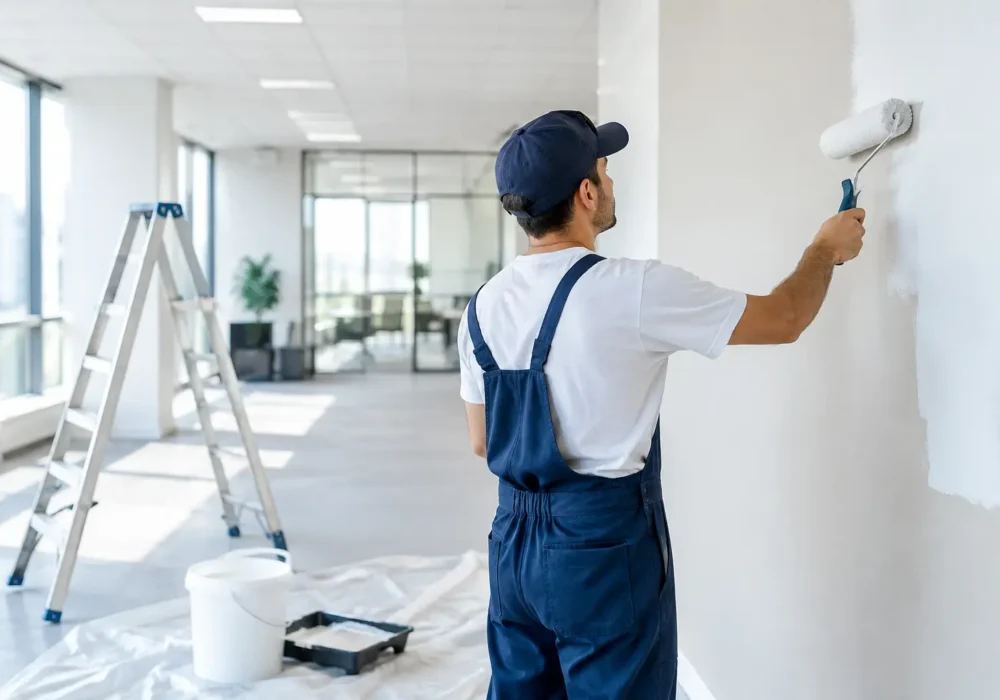
A fresh commercial repaint can change how customers, tenants, staff and visitors experience a space before a word is spoken. This guide to repainting commercial interiors explains how to plan the work properly, minimise disruption and achieve a finish that continues to look professional under daily use.
Commercial painting is rarely as simple as choosing a colour and applying two coats. Offices, retail spaces, schools, medical rooms, hospitality venues and places of worship all have different demands. The best approach considers the building’s use, surface condition, operating hours, safety requirements and the practical realities of keeping the premises open.
Start with the purpose of the repaint
Before looking at colour cards, be clear about what the project needs to achieve. A retail shop may need a clean, current look that supports its brand and encourages customers to stay. An office may need lighter walls to improve brightness and create a calmer working environment. For a rental, education facility or high-traffic public area, durability and ease of cleaning may be the priority.
This decision shapes almost every other part of the job. It affects paint selection, sheen level, the amount of preparation required and whether the work should be completed in stages. A repaint intended to refresh a space before a lease handover can be handled differently from a full refurbishment designed to last for years.
It is also worth deciding which areas actually need attention. Painting every room at once is not always necessary. A reception area, corridors, meeting rooms, staff amenities and customer-facing walls often deliver the most visible improvement, while storage areas may be scheduled later if the budget is tight.
Plan around business operations
The biggest challenge in commercial interiors is often not painting itself. It is completing the work without affecting staff, customers, students or tenants.
Walk through the premises and identify the busiest areas, access points, emergency exits, sensitive equipment and rooms that cannot be taken out of service. For example, a school may need work completed during term breaks, while an office may prefer evenings or weekends. A shop may need painters to work in sections so trade can continue, and a medical or food-related setting may require additional attention to cleanliness, ventilation and odour.
A practical scope should set out which rooms will be painted, when each area will be available and who is responsible for moving furniture or equipment. Clear communication prevents last-minute delays. It also helps staff understand why a walkway may be temporarily closed or why a meeting room is unavailable for a day.
Where possible, stage the project. Completing one floor, wing or group of rooms at a time keeps more of the premises operational. It may take longer than closing the whole building, but the reduced disruption can be worth it.
Inspect surfaces before choosing paint
Paint performs only as well as the surface beneath it. Commercial walls can hide years of scuffs, adhesive residue, patch repairs, moisture marks and poorly bonded old coatings. Covering these issues without proper preparation may make the room look better briefly, but the finish can soon peel, stain through or show uneven patches.
A thorough inspection should look for cracking, flaking paint, dents, holes, failed caulking, mould, water damage and damage around doors, corners and skirting boards. Ceilings and high walls deserve close attention too, particularly where there have been roof leaks or air-conditioning issues.
Moisture problems need to be resolved before repainting. Painting over an active leak or persistent condensation issue is a short-term cosmetic fix, not a solution. Stains may need sealing with the right primer after the source has been repaired, while mould should be safely treated and the cause addressed.
Minor carpentry repairs can also make a substantial difference. Damaged timber trims, loose skirting boards, worn door frames and small sections of deteriorated lining should be repaired before painting, rather than simply coated over.
Preparation is where a lasting finish begins
Proper preparation takes time, but it is the part of the project that determines whether a repaint looks tidy and lasts. Depending on the site, this may include washing walls, scraping loose material, sanding glossy surfaces, filling holes, gap sealing, spot priming and applying a full undercoat where needed.
High-touch areas need particular care. Doors, frames, light switches, corners and hallway walls are usually where marks and chips appear first. A professional painter will prepare these areas carefully and protect floors, furniture, fixtures and nearby equipment before work begins.
Choose colours and sheen levels for real-world use
Commercial colour choices should support the space, not fight it. Neutral colours remain popular because they are flexible, easy to maintain and suitable for changing tenants or displays. Warm whites and soft greys can make offices and reception areas feel bright without appearing stark. In retail or hospitality spaces, a feature colour may be useful for branding, wayfinding or creating focus.
Always consider the existing lighting. A colour that looks warm in a showroom can appear cool under fluorescent lighting, while natural light can change significantly between a street-facing room and an internal office. Test samples on the actual walls and check them at different times of day before approving the final colour.
Sheen level matters just as much as colour. Lower-sheen finishes can help hide minor wall imperfections and are often suited to offices and meeting rooms. Washable low-sheen or satin finishes are often a better choice for corridors, waiting rooms and staff areas because they stand up better to regular cleaning. Semi-gloss is commonly used on doors, trims and other hard-wearing surfaces.
There is a trade-off. Higher-sheen paints are generally easier to wipe down, but they can highlight dents, uneven patching and surface flaws. If the walls are rough or heavily repaired, more preparation or a lower sheen may produce the better overall result.
Select products for durability and the site conditions
Not every interior paint is suitable for commercial use. Products should be chosen for the room’s traffic level, cleaning requirements and exposure to moisture or wear. A quiet private office has different needs from a busy school hallway, a café kitchen entrance or a shared tenancy corridor.
For high-use spaces, look for quality washable coatings with good scuff resistance. In bathrooms, kitchens and other humid areas, choose products designed to resist moisture and allow the surface to be cleaned regularly. Low-odour, low-VOC options can be valuable where people need to return to the space quickly, particularly in offices, schools and healthcare-related environments.
The fastest-drying product is not always the right choice. Drying time, curing time and ventilation all need to be considered. Paint may feel dry to touch within hours, but it can take longer to reach its full hardness. Avoid placing heavy furniture against freshly painted walls or cleaning the coating too aggressively before it has cured.
Prepare the site for a clean, efficient job
A well-organised site protects your business as well as the paintwork. Remove or secure small items, paperwork, stock and electronics where possible. Larger furniture can often be moved to the centre of the room and covered, provided there is enough working space around it.
Let staff know what to expect before the job starts. This includes access arrangements, parking for the painting team, rooms that will be unavailable, potential noise from sanding and any requirements for alarms, keys or security procedures. Good planning avoids the frustration of painters arriving at a locked site or discovering that a room cannot be accessed during the agreed time.
Professional painters should keep work areas orderly, use appropriate floor protection and clean up progressively rather than leaving a site untidy until the final day. For occupied workplaces, that level of care is essential.
Check the finish before sign-off
Once painting is complete, inspect the work in normal lighting as well as with lights on. Look along walls from different angles for missed spots, thin coverage, drips, visible patching or rough edges around trims and fixtures. Check that doors open freely, switch plates are clean and furniture has been returned without damage.
Keep a record of the paint colours, brands, product names and sheen levels used. This makes future touch-ups and staged repainting far easier. If your business has a maintenance schedule, note which high-traffic areas may need review sooner than the rest of the building.
For commercial properties across Wyndham, Hobsons Bay, Greater Geelong, the Bellarine Peninsula and Surf Coast, Seaview Painting Services can help plan an interior repaint around your operating needs, with detailed preparation, clear communication and a clean finish.
A commercial repaint should make the next working day feel easier, not create more problems to manage. When the preparation, scheduling and product choices are right, the finished space will present your business well long after the drop sheets are packed away.