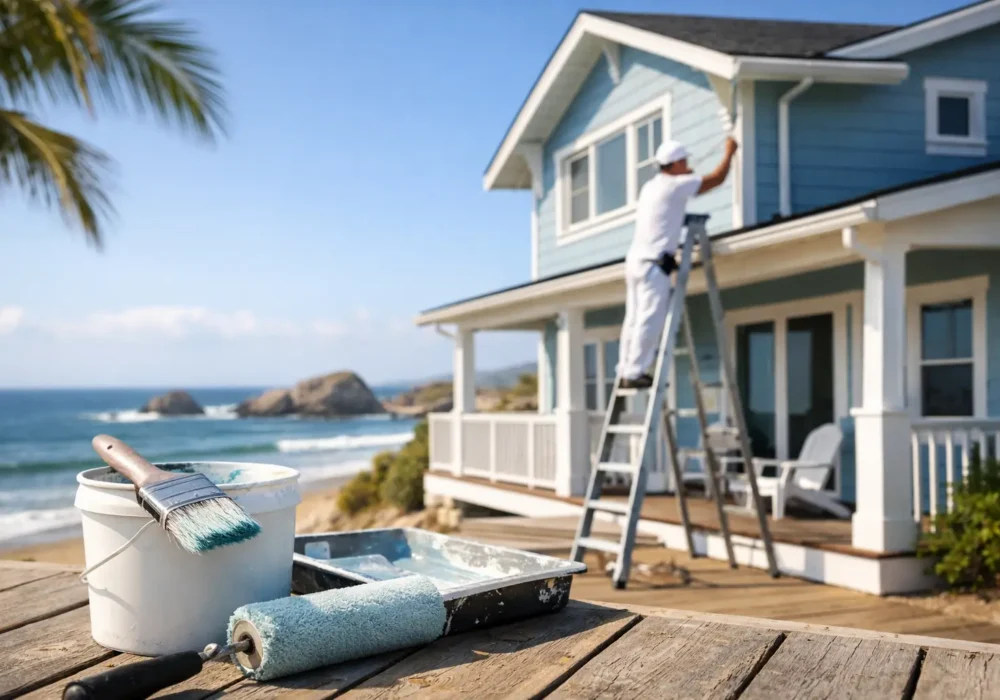
A coastal home can look freshly painted one season and tired well before its time the next. Salt carried on the wind, driving rain, strong UV and damp mornings all put pressure on exterior coatings. The best paint for coastal homes is not simply the most expensive tin on the shelf. It is a complete paint system chosen for the surface, prepared properly and maintained before small issues become major repairs.
For properties across the Bellarine Peninsula, Surf Coast, Hobsons Bay and Greater Geelong, the difference is especially clear on exposed weatherboards, timber trims, decks, fences and metalwork. A quality finish needs to cope with the local conditions while still looking right for the style of your home.
Why coastal conditions are hard on paint
Salt is the main challenge near the coast. Fine salt particles settle on painted surfaces, drawing moisture from the air and sitting against the coating. Over time, this can contribute to staining, chalking, blistering and early paint breakdown. On steel, salt and moisture can speed up corrosion where a coating has failed or been damaged.
UV exposure is another issue. Australian sunlight can fade colour and gradually break down paint binders, particularly on elevations that receive prolonged afternoon sun. Dark colours often absorb more heat, so they can be harder on timber and may show fading sooner than lighter shades.
Wind-driven rain finds weak points around windows, fascia boards, joints and end grain. If gaps have not been sealed or bare timber has not been primed, moisture can work behind the paint film. Peeling paint is often a symptom of this underlying issue, rather than a problem that can be solved by applying another coat over the top.
The amount of exposure matters. A home a few streets back from the beach may need a different approach from a property directly facing the water. Sheltered walls also generally perform better than a western or southern wall exposed to weather. This is why one paint recommendation does not suit every coastal property.
The best paint for coastal homes starts with the right system
For most exterior timber and weatherboard homes, a premium exterior water-based acrylic paint system is a dependable choice. Quality acrylic coatings are flexible enough to move with timber through changing temperatures, resist UV well and are available in finishes suited to broad exterior surfaces, trims and doors.
A low-sheen exterior finish is commonly a practical option for weatherboards, rendered walls and fibre cement. It gives a neat, modern appearance without showing every minor surface imperfection as clearly as a higher sheen. It is also generally easier to wash than a flat finish, which is useful where salt residue and coastal grime build up.
Semi-gloss or gloss paint is often better suited to doors, window frames, fascia, eaves details and trims where a tougher, more washable finish is wanted. The trade-off is that higher-sheen paints reveal sanding marks, uneven repairs and surface defects more readily. Thorough preparation is essential if a gloss finish is part of the plan.
For masonry, brick or rendered surfaces, choose an exterior coating designed for mineral substrates. These products need to adhere properly while allowing the wall to release moisture vapour. Painting over damp masonry or using an unsuitable coating can trap moisture and lead to bubbling, flaking or patchy colour.
Metal fences, gutters, balustrades and steel features need their own system. Any corrosion must be removed or treated, then the surface should receive the correct metal primer before topcoats are applied. Exterior wall paint is not a substitute for a corrosion-resistant metal coating.
Do not overlook primers and sealers
Primer is not an optional extra on bare, weathered or repaired surfaces. It helps create an even base, improves adhesion and supports a longer-lasting topcoat finish. Bare timber, filled areas, exposed end grain, tannin-prone timber and repaired sections all need careful attention before painting begins.
A stain-blocking or specialised primer may be required where water marks, rust staining, knots or tannins are present. Applying topcoat directly over these areas can allow staining to bleed through, even when the new paint initially looks perfect.
On a repaint, the existing coating also needs to be assessed. If old paint is sound, cleaned and properly sanded, it can often be painted over. If it is peeling, powdery, unstable or poorly bonded, more removal and repair work will be needed. Skipping this step risks the new coating failing with the old one underneath.
Preparation matters more than the label on the tin
Even the best exterior paint cannot compensate for salt, dirt, mould, loose paint or rotten timber. A professional coastal repaint begins with a close inspection of the home, particularly the elevations that receive the most weather.
Washing removes salt deposits, surface grime and biological growth. This is not simply about making the home look clean. Paint needs a clean, stable surface to bond correctly. Areas affected by mould should be treated appropriately, then allowed to dry fully before painting.
Loose and flaking coatings need to be scraped back, while sound edges are feather-sanded so they do not show through the new finish. Cracks, nail holes and minor defects are filled, and gaps around trims or boards are sealed with a suitable flexible gap sealant. Damaged timber should be repaired or replaced before painting, not covered in the hope that the coating will hold it together.
Timing also matters. Painting during wet, windy or excessively hot conditions can affect drying and cure times. Coastal weather can change quickly, so the job needs to be planned around suitable conditions rather than rushed to meet an arbitrary date.
Choosing colours for a coastal property
Colour choice is about more than style. Lighter colours generally reflect more heat and tend to be more forgiving on exposed cladding. They can also suit the relaxed character of coastal homes, from classic weatherboards to newer rendered builds.
That does not mean dark colours are off limits. Deep charcoals, blues and greens can look excellent, especially when used on feature areas, doors or trims. However, on full sun-facing timber walls, darker colours can increase heat movement and demand more from the paint system. The surface type, existing colour and amount of exposure should all be considered before making a dramatic colour change.
It is also worth testing colour samples on different sides of the house. The same colour can look completely different in bright coastal light, shaded verandahs and late-afternoon sun. Looking at samples across a few days gives a much more reliable result than choosing under showroom lighting.
Paint finishes to avoid using in the wrong place
Interior paint should never be used outside, even on a protected porch. It is not formulated to deal with UV, rain or large temperature changes. Likewise, a cheap exterior coating may look acceptable at first but can lose colour, chalk or peel sooner in a high-exposure setting.
Very flat finishes may suit some architectural exterior designs, but they are not always the easiest choice near the coast. They can hold dirt and be harder to clean without marking. A quality low sheen is often the better balance of appearance and practical maintenance for many homes.
Decks need separate consideration. Standard wall paint is not suitable for walking surfaces. Deck boards require a purpose-made decking oil, stain or coating system, selected according to the timber, previous treatment and the level of sun and foot traffic. Coatings that form a heavy film can peel if moisture is trapped or preparation is incomplete.
How to keep a coastal paint job looking good
A new exterior paint job should not be left untouched for years. Regular care is simple and can add valuable life to the coating. Wash exterior walls, trims and gutters periodically to remove salt and airborne grime, with more frequent cleaning for homes close to the shoreline.
Inspect the property at least once a year, paying attention to windows, fascia, timber joints, decking and exposed edges. Early signs such as hairline cracks, open gaps, blistering, rust spots or peeling paint should be addressed promptly. A small repair and touch-up is far easier than allowing water to get behind the coating.
Keep gardens trimmed back from walls and clear leaves from gutters. Plants that sit against painted surfaces can trap moisture, while overflowing gutters can cause staining and water damage that no paint system can prevent.
For homeowners who want the work managed carefully from preparation through to clean-up, Seaview Painting Services can assess the condition of the property and recommend a paint system suited to its exposure, materials and finish goals. The right decision is rarely just about a colour chart. It is about protecting the home you have worked hard to create, with quality preparation and a finish built to handle the coast.