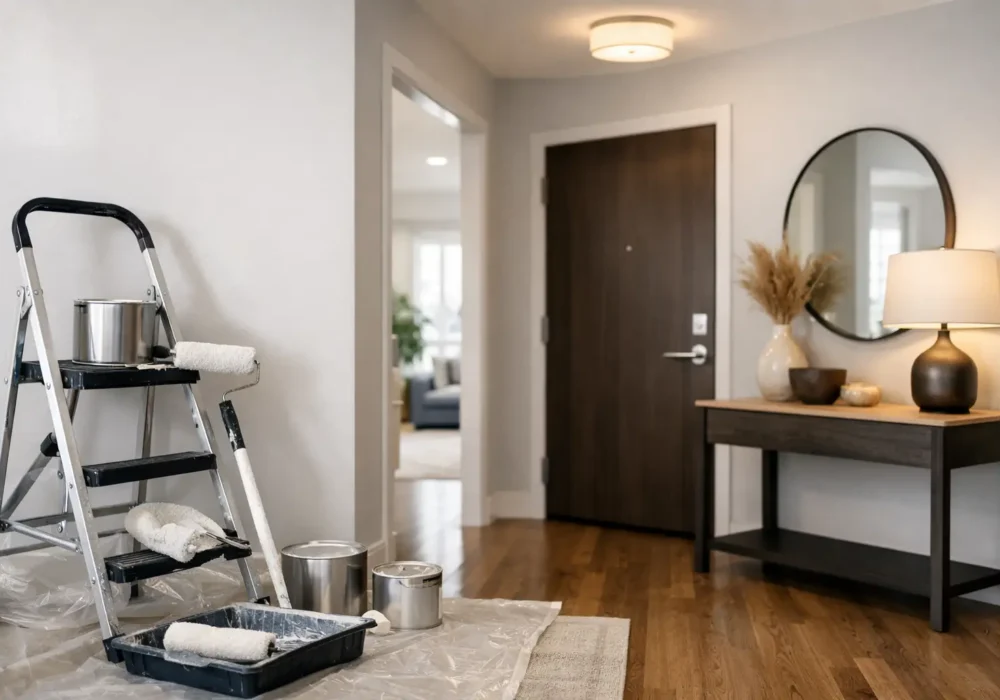
An apartment foyer painting case study is about far more than choosing a fresh wall colour. A foyer is the first space residents, visitors, buyers and tenants see. It also carries the daily wear of shoes, prams, delivery trolleys, umbrellas, bags and moving boxes. The work needs to improve presentation, but it also needs to stand up to real use without creating unnecessary disruption for people coming and going.
For this shared-entry refresh, the brief was clear: brighten a tired apartment foyer, address visible scuffs and minor surface damage, and complete the work with a clean, durable finish. The property needed to remain accessible throughout the project, so preparation, staging and communication were just as important as the final coats of paint.
The condition of the foyer before painting
The foyer had good natural proportions, but the existing finish made it feel darker and less cared for than it should have. High-contact areas around the entry door, mailboxes and corners showed hand marks, scuffing and small chips. There were also minor cracks around trim lines and a few dents where furniture and deliveries had caught the walls.
These marks can be tempting to paint straight over, particularly in a common area where there is pressure to get the job completed quickly. But a new coat will not hide poor preparation for long. Scuffs can telegraph through the finish, cracks can reopen, and glossy patches from previous touch-ups can remain visible when light hits the wall from the side.
The first step was to assess each surface rather than treating the foyer as one uniform painting job. Plaster walls, previously painted timber trims, door frames and metal fixtures all need slightly different preparation and coating methods. This is where an experienced painter can save a building manager or owner from repeat work later.
Planning an apartment foyer painting project around residents
Painting a foyer requires practical planning because it is a shared thoroughfare. Residents still need safe access to their homes, trades may need to enter, and deliveries cannot always be scheduled around painting hours.
The work was staged so one section could be prepared and painted while a clear path remained available. Floors and nearby fittings were protected, signage was used where needed, and equipment was kept tidy rather than left across the entry. At the end of each day, the area was left orderly so residents were not walking through an unfinished work zone.
Timing also matters. In an apartment building, noisy sanding and filling work is best completed at sensible hours, while quieter cutting-in and coating can continue with less impact. For occupied properties, clear notice before work begins helps avoid frustration and gives residents confidence that the project is being handled professionally.
There is a balance to strike here. Working around access requirements can take longer than closing off a vacant space, but it is usually the right approach for a functioning apartment building. A quality result should not come at the expense of safety, cleanliness or basic consideration for residents.
Preparation made the difference
The visible painting stage is only one part of the job. In this apartment foyer painting case study, the preparation work created the foundation for a finish that looked even from every angle.
Walls were cleaned to remove built-up dirt, hand marks and residue that could affect adhesion. Damaged areas were filled and sanded smooth, with extra attention given to corners and lower wall sections that receive the most knocks. Fine cracks were opened, filled and sanded rather than simply coated over.
Gaps between trims and walls were sealed where required to create cleaner lines. Previously painted timber trims and door frames were sanded to remove rough edges and improve paint grip. Areas with repairs or inconsistent surfaces were spot-primed before top coating.
This stage can feel slow, but it prevents the familiar problems seen in rushed common-area repaints: flashing over filler, rough patches under a new paint film, visible brush marks around door frames, and paint that begins to chip after a short period. Thorough preparation is what gives the final colour a chance to look its best.
Choosing a practical colour and sheen
The colour direction needed to make the foyer feel lighter while remaining forgiving in a high-traffic environment. A soft, warm neutral was chosen for the main walls. It gave the space a cleaner appearance than the previous darker tone without becoming stark or clinical under artificial lighting.
For foyers, the lightest white is not always the best choice. Bright whites can show every scuff, shadow and repair line, particularly near entrances. A light neutral can provide the same sense of freshness while being more practical for day-to-day living.
The sheen level was selected for cleanability and appearance. A washable low-sheen finish is often a sensible choice for apartment walls because it offers more resistance to marks than flat paint while avoiding the high reflection of a glossier coating. Higher-sheen paint was used where suitable on trims and doors, helping those hard-wearing surfaces hold up to regular contact.
Paint selection always depends on the existing surfaces, lighting and how the area is used. A foyer with young families, pets or frequent tenant turnover may benefit from a more durable, washable system than a quiet owner-occupied building.
Applying the finish with care
Once preparation and priming were complete, the painting could move efficiently. Edges around frames, fixtures and ceiling lines were cut in neatly before larger wall areas were rolled. Maintaining a wet edge and applying consistent coverage helped avoid lap marks, which can be particularly noticeable in foyers with overhead downlights or windows near the entrance.
Two properly applied finish coats gave the walls a fuller, more even colour. The goal was not simply to make the foyer look freshly painted on handover day. It was to create a finish with adequate coverage and durability for the months ahead.
Doors and trims received careful attention because they frame the whole space. Even when walls are painted well, chipped skirtings or tired door frames can make a foyer feel unfinished. Refreshing these details brought the entry together and made the whole area feel more considered.
Clean-up was completed progressively, not saved for the final hour. Protective coverings were removed carefully, fixtures were checked for overspray, and the entry was left presentable and ready for residents to use.
The result: a brighter entry that works harder
The finished foyer felt lighter, cleaner and more welcoming without looking overdone. Repairs disappeared into the surrounding surfaces, the wall finish appeared even in changing light, and the refreshed trims gave the entry sharper definition.
Just as valuable was the practical outcome. The selected coating system made future cleaning and touch-ups more manageable, while the thorough prep work reduced the risk of early peeling or visible repair patches. For landlords and property managers, that can mean fewer presentation issues between inspections or tenant changes. For owners, it helps protect the impression the building makes every day.
What property owners can take from this foyer painting case study
A successful foyer repaint starts with recognising that shared entrances are working spaces. They need finishes that look good, clean well and cope with regular contact. Spending time on washing, filling, sanding, sealing and priming is usually more valuable than rushing straight to a premium topcoat.
It also pays to consider access before the first drop sheet goes down. Discuss resident communication, safe walkways, work hours, drying times and whether door frames, skirtings or damaged trim should be included in the scope. A clear plan avoids surprises once work is underway.
For apartment owners, body corporates and property managers across Wyndham, Hobsons Bay, Greater Geelong and surrounding areas, Seaview Painting Services can assess the condition of a foyer and provide a free, no-obligation quote. Jason takes a hands-on approach to preparation, painting and clean completion, with the aim of making the process straightforward for everyone using the building.
A well-painted foyer does not need to be flashy to make an impact. When surfaces are properly repaired, colours suit the light and the finish is built for daily use, the entry quietly tells residents and visitors that the property is cared for.