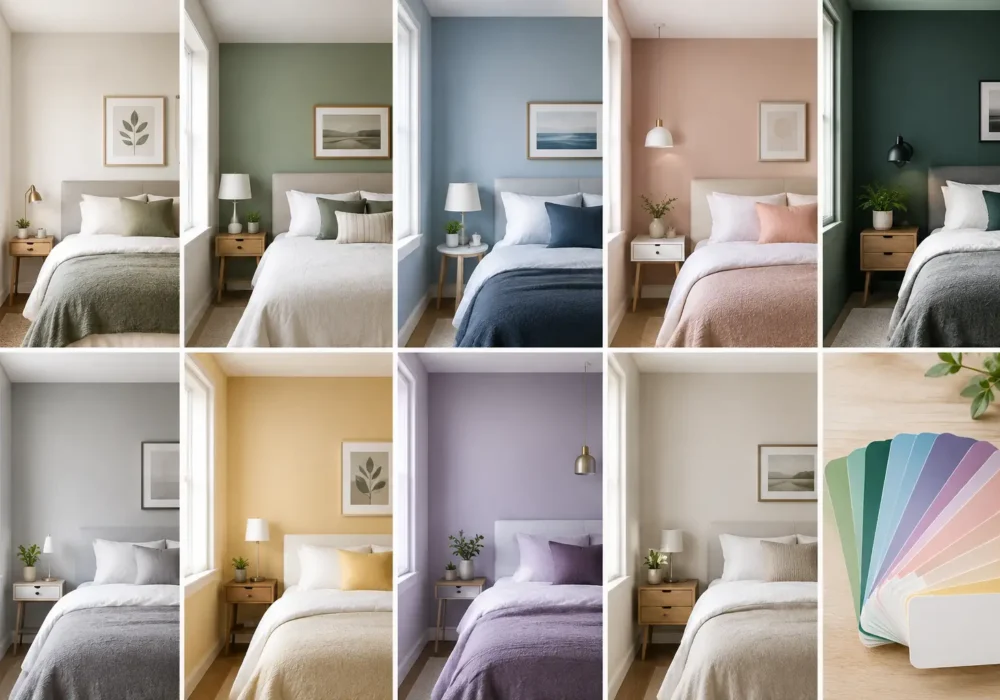
A small bedroom does not need to be painted white by default. The best paint colours for small bedrooms are the ones that work with the room’s natural light, the furnishings you already own and the feeling you want at the end of the day. A well-chosen deeper shade can feel restful and tailored, while the wrong pale colour can look cold, flat or surprisingly dingy.
For bedrooms in Werribee, Point Cook, Geelong and along the coast, daylight can change sharply through the day. That is why choosing a colour from a tiny swatch alone is risky. Test a larger sample on more than one wall, then look at it in morning light, afternoon light and under your bedside lamp before committing.
Best paint colours for small bedrooms: start with the light
Room size matters, but the direction of the windows matters more than many people expect. A north-facing bedroom usually receives warmer, more consistent light and can handle cooler neutrals or gentle blue-greens well. South-facing rooms tend to have cooler light, so a warm white, soft beige or muted clay tone often prevents them feeling stark.
East-facing bedrooms feel bright early, then quieter later in the day. Warm off-whites and softened greens suit them beautifully. West-facing rooms can become very warm in the afternoon, where balanced greys, dusty blue and restrained neutrals can bring a little calm.
Paint is not a magic way to add square metres, but it can change the visual boundaries of a room. Low-contrast colours make walls, ceilings and trims feel more connected, so the eye travels around the room without stopping at harsh lines. Strong contrast can still work, but it needs to be deliberate.
10 colours that make a small bedroom feel considered
1. Warm white
A warm white is one of the safest choices for a compact bedroom, especially where natural light is limited. Look for an off-white with a subtle cream, stone or beige undertone rather than a brilliant white. It keeps the space light while feeling more relaxed than a clinical, blue-based white.
Use the same warm white on walls and ceiling for a gentle, open result. Crisp white trims can work, but the contrast will make the room’s edges more obvious.
2. Soft greige
Greige sits between grey and beige, giving a bedroom a calm, modern base without looking cold. It works particularly well with timber furniture, linen bedding, black accents and natural flooring. In a very dark room, choose a lighter greige with warmth rather than one that reads as concrete grey.
This is a practical option for landlords and homeowners wanting a versatile colour that will suit changing furniture and décor.
3. Pale mushroom
Mushroom is a muted taupe with an earthy, understated character. It is a lovely alternative to grey when you want depth but do not want a dark room. In small bedrooms, pale mushroom softens hard finishes and creates a comfortable backdrop for white, charcoal, olive and timber tones.
It also has enough substance to hide minor marks better than a very pale white, which can be useful in children’s rooms or guest bedrooms.
4. Powder blue
A softened blue can make a small bedroom feel airy without being overly sweet. Choose a greyed or smoky powder blue rather than a bright aqua or baby blue. These quieter blues work well in bedrooms with good daylight and pair naturally with white bedding, pale timber and brushed metal fittings.
If the room faces south or has little daylight, balance powder blue with warm white trims, warmer lighting and natural textures so it does not feel chilly.
5. Muted sage green
Sage is popular for good reason. It brings a connection to the outdoors while remaining gentle enough for a bedroom. In a small room, a muted sage with grey or earthy undertones is generally easier to live with than a vivid green.
Sage suits homes with timber floors, rattan, off-white curtains and layered neutral bedding. It can also provide a soft contrast to warm timber joinery without becoming the dominant feature.
6. Blue-green
A restrained blue-green has a peaceful, coastal quality that feels right at home around the Bellarine Peninsula and Surf Coast, but it does not need to look themed. The best versions are dusty and complex, sitting somewhere between eucalyptus, teal and slate.
This colour is often effective on a feature wall behind the bed, though it can be used on all four walls if the shade is softened and the room receives reasonable light. Keep the ceiling and trim tones sympathetic rather than sharply white.
7. Blush beige
Forget bright pink. A blush beige is a warm neutral with a faint rose or peach undertone, and it can make a small bedroom feel welcoming at night. It is especially flattering in rooms with afternoon sun and pairs well with walnut, oak, rust, olive and cream.
The key is restraint. Test it beside your bedding and flooring, as a colour that looks neutral in the paint shop may show more pink once it covers a full wall.
8. Soft clay
For homeowners wanting more personality, soft clay and pale terracotta can create a cocooning effect without closing the room in. These earthy colours are particularly good in bedrooms with cool light because they add visual warmth.
Use a light, dusty version rather than a saturated orange. A clay wall behind the bed, with warm white on the remaining walls, is a balanced approach if painting the entire room feels like too much of a commitment.
9. Charcoal or deep navy
Dark colours are not off limits in small bedrooms. A deep charcoal, inky navy or softened black can blur the corners of the room and make it feel intimate rather than cramped. This approach works best when the room is used mainly for rest, not as a bright dressing space or home office.
Paint all walls for a more enveloping look, or use one wall behind the bed for a stronger focal point. Good lighting, lighter bedding and a quality finish are essential. Patchy walls and poorly prepared trim become much more noticeable with darker paint.
10. A tonal colour wrap
Sometimes the best choice is not one colour but a tonal approach. Painting walls, ceiling, doors and trims in related versions of the same colour reduces visual breaks and can make a small bedroom feel more complete. For example, use a soft olive on the walls, a lighter olive-white on the ceiling and a slightly deeper trim colour.
This style is particularly effective in older homes with detailed doors, picture rails or awkwardly placed trims. Rather than fighting those features, it lets them become part of the room.
Choose the right paint finish as well
Colour does a lot of the work, but sheen affects the final result. For most bedroom walls, a low-sheen acrylic finish gives a soft appearance with enough washability for everyday use. Flat finishes can look elegant, but they are less forgiving if walls need regular cleaning. Ceilings are usually best in a flat finish, while doors, skirtings and window trims need a more durable enamel or water-based trim paint.
Preparation matters before any finish goes on. Filling dents, sanding rough patches, sealing gaps and using the correct primer creates an even surface, particularly with deep colours and low-sheen paints. A professional paint job should look consistent from one wall to the next, not just look good from the doorway.
Avoid these common small-bedroom colour mistakes
The most common mistake is choosing a white that clashes with the flooring, blinds or existing trim colour. Another is selecting a colour based on a mobile screen, which cannot show undertones accurately. Sampling is worth the extra time.
It is also worth thinking beyond the bedroom itself. If the room opens onto a hallway or ensuite, colours should sit comfortably together. You do not need every space to match, but a considered flow makes a home feel calmer and better finished.
For a bedroom that needs patching, repairs or a complete refresh, Seaview Painting Services can help with colour guidance, thorough preparation and a clean, long-lasting finish. A few well-tested samples and the right level of contrast can turn even the smallest bedroom into a space that feels like it belongs to you.